Algonquin Round Table History,News Round Table Movies in the Library of Congress

Round Table Movies in the Library of Congress

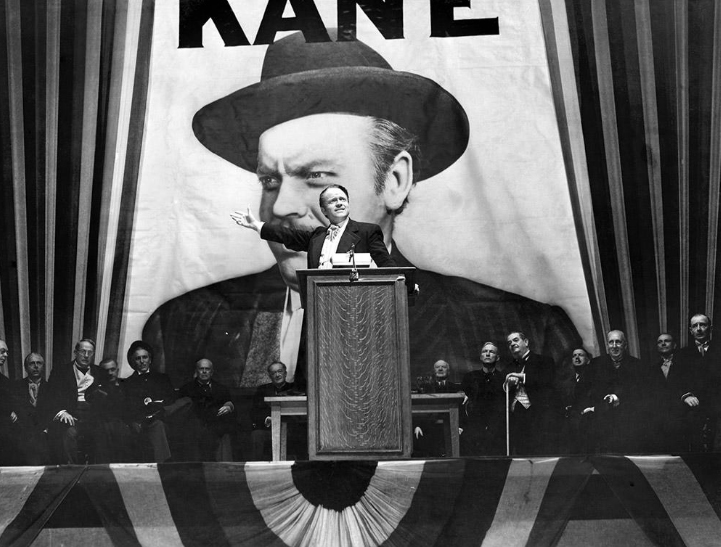
citizen kane

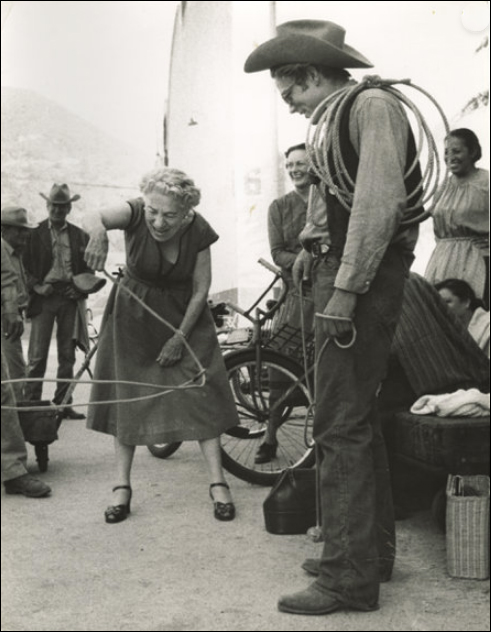
GIANT

Edna Ferber and James Dean on the set of Giant.

The Algonquin Round Table has many ties to film history. With so many writers and actors, it’s no wonder there are links to many classic Hollywood productions. Most of these names are in The Algonquin Round Table New York: A Historical Guide. Lucky for us, the Library of Congress National Film Registry is around.

Motions pictures that members of the Round Table contributed to, and that the Library of Congress has added to the National Film Registry. These films are to be preserved in the national archives for perpetuity:

A Night at the Opera (Harpo Marx, star; George S. Kaufman, screenplay)

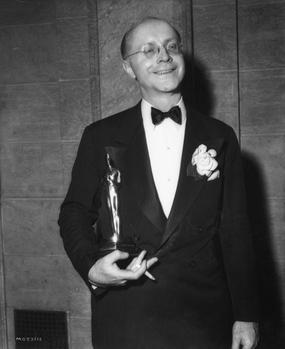
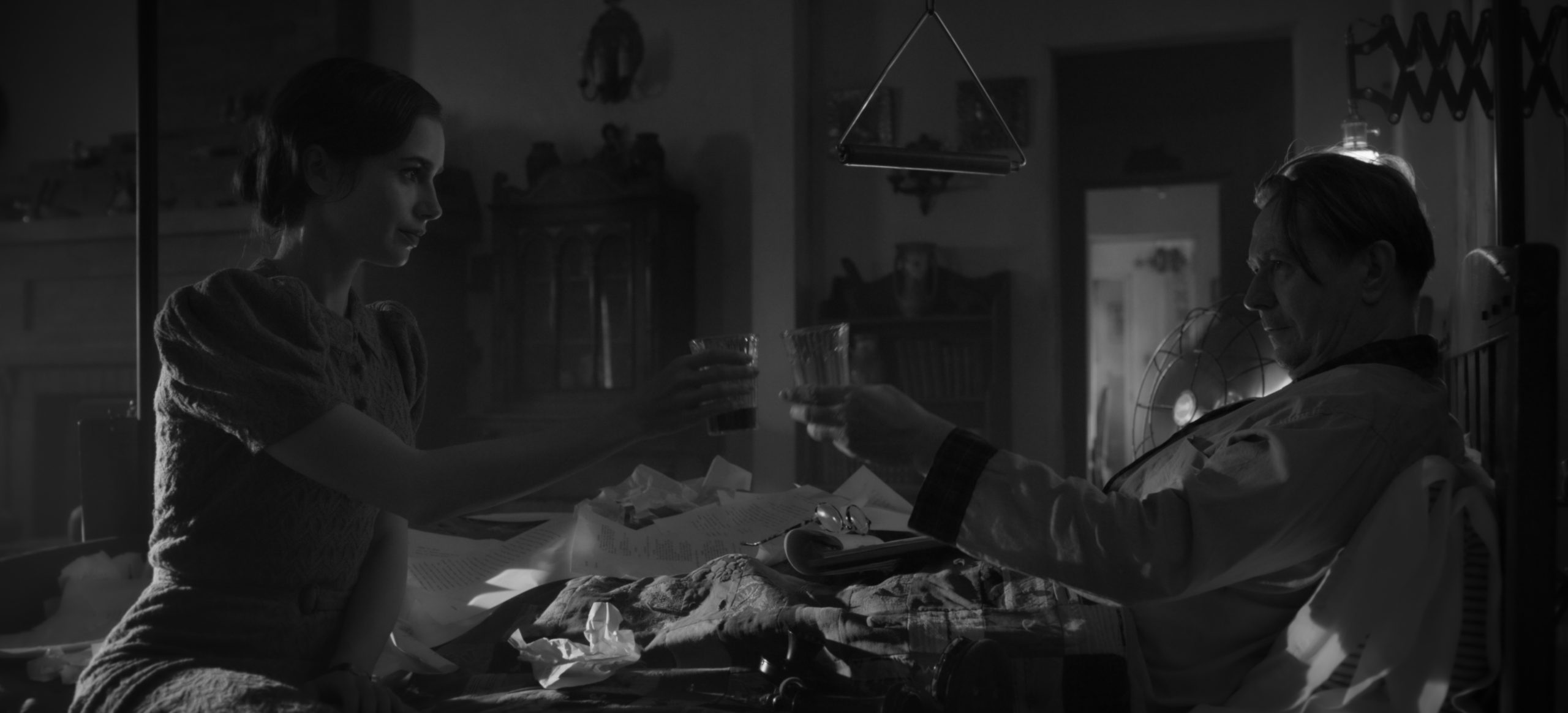
Citizen Kane (Herman J. Mankiewicz, writer)

Duck Soup (Harpo Marx, star)

Giant (Edna Ferber, writer)

Showboat (Edna Ferber, writer)

It’s A Wonderful Life (Dorothy Parker, un-credited script doctor)

The Big Parade (Laurence Stallings, writer)

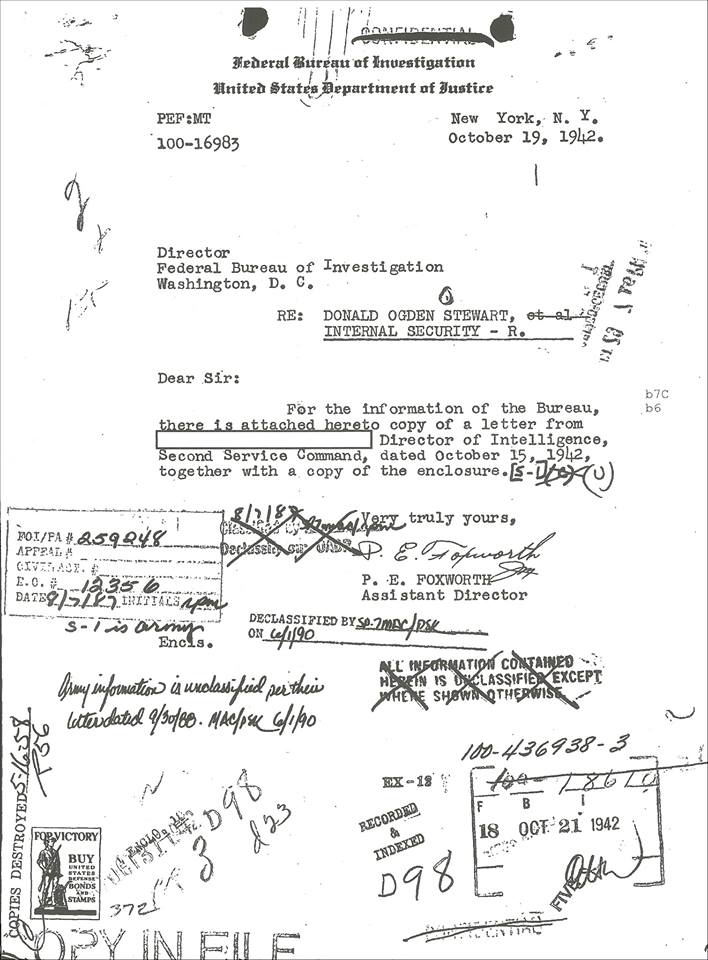
The Philadelphia Story (Donald Ogden Stewart, adapted screenplay)

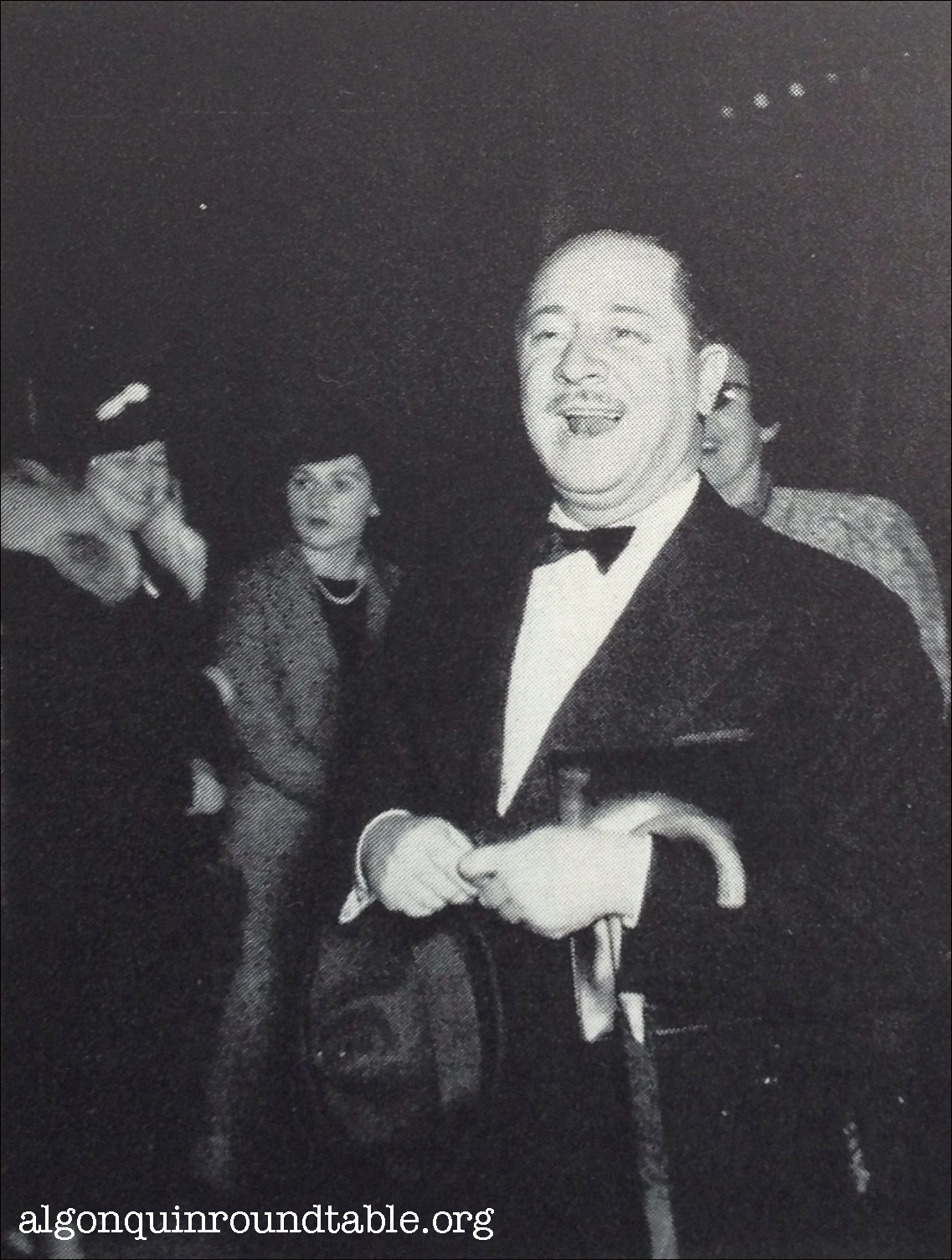
The Sex Life of the Polyp (Robert Benchley, writer & star)

The Sound of Music (Peggy Wood, co-star)

How many have you seen? Do you think any were overlooked?

Related Post

Former location of the Blue Bar and Oak Room.

Algonquin Hotel Gut Renovation Moves Bar, Reconfigures LobbyAlgonquin Hotel Gut Renovation Moves Bar, Reconfigures Lobby

Former location of the Blue Bar and Oak Room.

Former location of the Blue Bar and Oak Room.


In the most extensive renovation in many decades, the Algonquin Hotel is underway with a major overhaul that has removed the bar, restaurant, front desk, and ceiling. The Round Table is gone, and so is the perch that Hamlet had in the window on Forty-fourth Street.

East side of hotel, where front desk was located.

East side of hotel, where front desk was located.


The hotel, opened in 1902, has removed the Blue Bar completely. Visible from the sidewalk, the ceilings are open and the floors are down to bare concrete. On the east side of the building, the front desk and the areas around it are wide open. The Round Table Room, at the back of the property, is under wraps. Little is visible from the street of the details.

It is currently not open to the public; the owners are using the pandemic to overhaul the property. In April the Algonquin was housing healthcare professionals.

The Algonquin was last renovated in 2012, in an overhaul that saw the Blue Bar expanded and the Oak Room reduced in size. That work maintained the distinctive qualities that dated to the 1998 renovation overseen by Alexandra Champalimaud. That had followed the $20 million mechanical renovation in 1991 ($38 million today) by the Aoki Corporation; that was when the tiny Blue Bar moved across the lobby.

Front entrance, closed to public.

Front entrance, closed to public.

While the Algonquin Hotel has city landmark status, it only applies to the exterior, not to the interior.

I have reached out to Marriott to inquire about a visit and look at the plans. An update could be coming soon.

These photos were taken on August 21, 2020. For the history of the Algonquin Hotel, buy the book.

West side of Blue Bar and Oak Room.

West side of Blue Bar and Oak Room.

Brock Pemberton

Brock Pemberton, From Kansas to the Great White WayBrock Pemberton, From Kansas to the Great White Way

Brock and Margaret Pemberton

Brock and Margaret Pemberton


Today is the anniversary of the birth of one of the most overlooked members of the Algonquin Round Table, namely, Brock Pemberton. His brother, Murdock Pemberton, gets barely more attention than his far more successful sibling. Let’s take a short dive into his life. All of the material is from The Algonquin Round Table New York: A Historical Guide.

It sounds like the story in a Broadway musical: hick conquers metropolis. However, this story was Brock Pemberton’s, and it really did happen that way. He went from Kansas newspaperman to powerful Broadway producer, and was the father of the annual Tony Awards.

Ralph Brock Pemberton was born December 14, 1885, in Leavenworth, Kansas. He grew up about 100 miles southwest, in Emporia, where his father worked as a salesman. He and his younger brother, Murdock, went to Emporia High School. Brock graduated in 1902 and attended the local College of Emporia for three years, before transferring to the University of Kansas. He got his A.B. degree in 1908 and returned home. Pemberton had known the legendary editor William Allen White of the Emporia Gazette since he was a boy, and White hired him as a reporter. Pemberton was a dynamo on the tiny staff.

Pemberton thrived on the Emporia newspaper under White’s tutelage. White had earned a national reputation for his provocative editorials, and made frequent trips to the East Coast. In the age-old way of newspaper employment, he spoke to a New York City editor on Pemberton’s behalf. With that, the 24 year-old booked a one-way ticket for Manhattan in 1910. Arriving on Park Row after a 1,300-mile train trek, he learned that the position was not going to materialize. But as luck would have it, someone gave him a note to hand to Franklin P. Adams, who was at the New York Evening Mail at the time. Just as F.P.A. would later stick his neck out for Robert Benchley and George S. Kaufman, he went to bat for Pemberton. He landed a job as a reporter.

After a few months Pemberton was transferred from the city desk to the drama department at the Mail. On his first assignment, he was sent to attend a musical called “Everywoman” at the Herald Square Theatre. Pemberton innocently reviewed the show as if he was an audience member in Emporia, with hilarious results. The staff found his hayseed review backslapping funny, and the edition became a collector’s item, to Pemberton’s embarrassment. He had to learn to be more hard-edged.

In 1911 he moved to the New York World drama desk, where he got to know the bustling theater business intimately. A few years later he was offered the position of assistant drama editor at the New York Times, working under Alexander Woollcott, who was the paper’s chief drama critic. His contacts grew. Pemberton had spent six years in New York journalism when producer Arthur Hopkins offered him a job in 1917. Hopkins was one of the most successful producers in the city, and Pemberton was put to work in every capacity, from set construction to directing. It was his new career.
Pemberton stayed in the Hopkins organization for just three years, but he learned the skills a producer would need. When Hopkins passed on producing a three-act comedy called “Enter Madame” in 1920, Pemberton asked if he could produce it. He took the biggest gamble of his life, and it paid off. The show ran for two years at the Garrick; he also directed the show. He was a newly minted Broadway producer at age 35. Soon after, Pemberton tapped Zona Gale to adapt her bestseller “Miss Lulu Bett” into a play, and he opened it two days after Christmas 1920. It was a smash success at the Belmont, and won the Pulitzer Prize as the year’s best drama the following year.

On Dec. 30, 1915, Pemberton married Margaret McCoy in East Orange, New Jersey. He was 30 and she was 36. She sometimes would work as a costumer on her husband’s shows.

In 1919, when the Round Table began, he was living at 123 East 53rd Street, between Park and Lexington avenues. The building has since been demolished. In 1918 he lived at 123 E. 53rd Street. He lived at 115 East 53rd Street in 1920, 1927, and 1931. In 1948 he was living at 455 E. 51st Street.

In 1925, the offices of Pemberton Productions, Inc. and Brock Pemberton, Inc. were at 224 West 47th Street. That building was demolished and is today the Hotel Edison, which opened in 1931.

Pemberton carved out a 30-year career in the theater business. He took on risky shows and had many hits, and several flops. He brought out the first plays by Maxwell Anderson and Sidney Howard. Among the many actors whose careers he launched onstage were Walter Huston, Miriam Hopkins, Claudette Colbert and Frederic March. In 1928 he lost $40,000 on a show, but bounced back the next year with the light comedy “Strictly Dishonorable” that began a long association with the actress-director Antoinette Perry. The pair had a string of hits together; some said they also had a long-running romantic relationship. The pair was among those that helped form the American Theatre Wing in 1939; the group put on the Stage Door Canteen shows for troops during the war. After Perry’s death in 1946, Pemberton pushed for the creation of the American Theatre Wing’s Antoinette Perry Awards for Excellence in Theatre — the Tony Awards.

Castle of Pierrefonds

Sergeant Woollcott’s 1919 Postcard from FranceSergeant Woollcott’s 1919 Postcard from France

The legends of the Algonquin Round Table trace their roots not to Manhattan but to places such as the Chateau De Pierrefonds. Never heard of it? The Round Table was born in World War I. Half of the 30 members were in France in uniform, or else as civilians working as volunteers or journalists. A postcard that was included in the Franklin P. Adams Archive from 1919 is one part of this legacy.

It is widely known that Capt. Adams, Pvt. Harold Ross, and Sgt. Alexander Woollcott were all members of The Stars and Stripes, the Army newspaper written and edited by Doughboys, for the Doughboys, at the behest of Gen. John J. Pershing. The trio formed a long friendship that would continue after the war.

Castle of Pierrefonds

When the Armistice was declared on Nov. 11, 1918, Adams was already back in New York. He served 196 days overseas and then returned home, arriving in New York on September 8, 1918, and honorably discharged December 3. But Ross and Woollcott remained behind, running the last issues of the newspaper and enjoying their time overseas. When the U.S. military was shipping home hundreds of thousands of men and women in uniform from France to go home, Ross and Woollcott were not on the packed troopships, jammed in with hordes of men who needed a bath. After wrapping up their Army careers, they took their discharges in France and took a civilian ocean liner home after a nice Spring vacation with a cruise around the Mediterranean. They didn’t get back to New York Harbor for several weeks.

FPA ID

Meanwhile, F.P.A. was back at work at the New York Tribune on Park Row. He continued to receive cards and letters from his friends stationed in France. Woollcott sent him a Christmas card of a fat Santa Aleck trying to get down a chimney. In March, a postcard arrived. Woollcott was touring battlefields with Pvt. C. LeRoy Baldridge, the staff illustrator on Stars and Stripes, who would later go on to publish a book of his Army art with Woollcott’s help.

The pair were doing what so many other Doughboys were doing, seeing the battlefields and no doubt collecting souvenirs. The soldiers found themselves at Chateau De Pierrefonds, in the Oise department in the Hauts-de-France region of Northern France. This was where fierce fighting had just occurred mere months before. Woollcott was right where today is the stunning and beautiful Oise-Aisne American Cemetery and Memorial which contains the graves of 6,013 American soldiers who died in battle.

A cheeky Woollcott sent this to F.P.A. on March 2, 1919:

Woollcott Postcard

Baldridge and I are out cruising around the battlefields and having a whale of a time. Pvt. Ross, our boss, says we must be back Tuesday but to hell with him. This little shack was infected with Americans all Summer.
A. Woollcott

[Underneath the Passed as Censored stamp is the name Stephen T. Early, who was an officer who worked in the office with the men, and went on to work for FDR.]

Shortly after this postcard was mailed, the men all lined up to be discharged. “The day after Sgt. Woollcott was demobilized he met General Pershing. “He’s a civilian now,” said Lieutenant Early, who introduced Woollcott to the C. in C. “He looks like a soldier to me,” said the General. “In Sgt. Woollcott’s twenty-two months in the Army, it was the first time anybody had said anything of the kind to him.”

Three months later, on a warm day in June, the Algonquin Round Table met for the first time in the Pergola Room on the Hotel Algonquin. Woollcott later presented a soldier’s portrait of himself–drawn by Baldridge–to Adams and Ross.

For more stories about the Algonquin Round Table, pick up a copy of The Algonquin Round Table New York, A Historical Guide</em> (Lyons Press), available wherever you buy books.