Algonquin Round Table Events,News Marx Brothers Festival Returns in May 2024

Marx Brothers Festival Returns in May 2024

Marxfest

It is exciting to announce that the Marx Brothers Festival is returning in May 2024 exactly ten years after the first successful Marxfest in New York. This week, the Marxfest committee announced the festival dates (May 17-19 and May 24-26), and revealed the names of just three of the many great events being planned:

ROBERT KLEIN REMEMBERS: The comedy legend on the Marx Brothers and their influence, in conversation with Jason Zinoman of The New York Times.

UNHEARD MARX BROTHERS: Audio Rarities with collector extraordinaire John Tefteller.

THE THRILL OF I’LL SAY SHE IS: The ultimate centennial experience.

MarxfestThere will be two weekends of Marx entertainment, May 17-19 in Manhattan and May 24-26 in Coney Island. The full calendar of events and ticket sales have not been announced yet. Currently a crowdfunding campaign is underway, and this supports the festival operations and expenses.

Noah Diamond of the committee wrote, “Donate to our crowdfunding campaign. Of course, this is another dreamy, fan-driven project with limitless reserves of nerve, moxie, pluck, vim, and vigor, but other resources are in shorter supply. We’re reliant on donations from fellow Marx Brothers fanatics to help defray expenses like space rentals, printing, equipment, and administration. You will not be surprised to hear that there are fabulous donor rewards described on our crowdfunding page — or that through our fiscal sponsor, Fractured Atlas, donations are tax-deductible to the fullest extent permitted by law!”

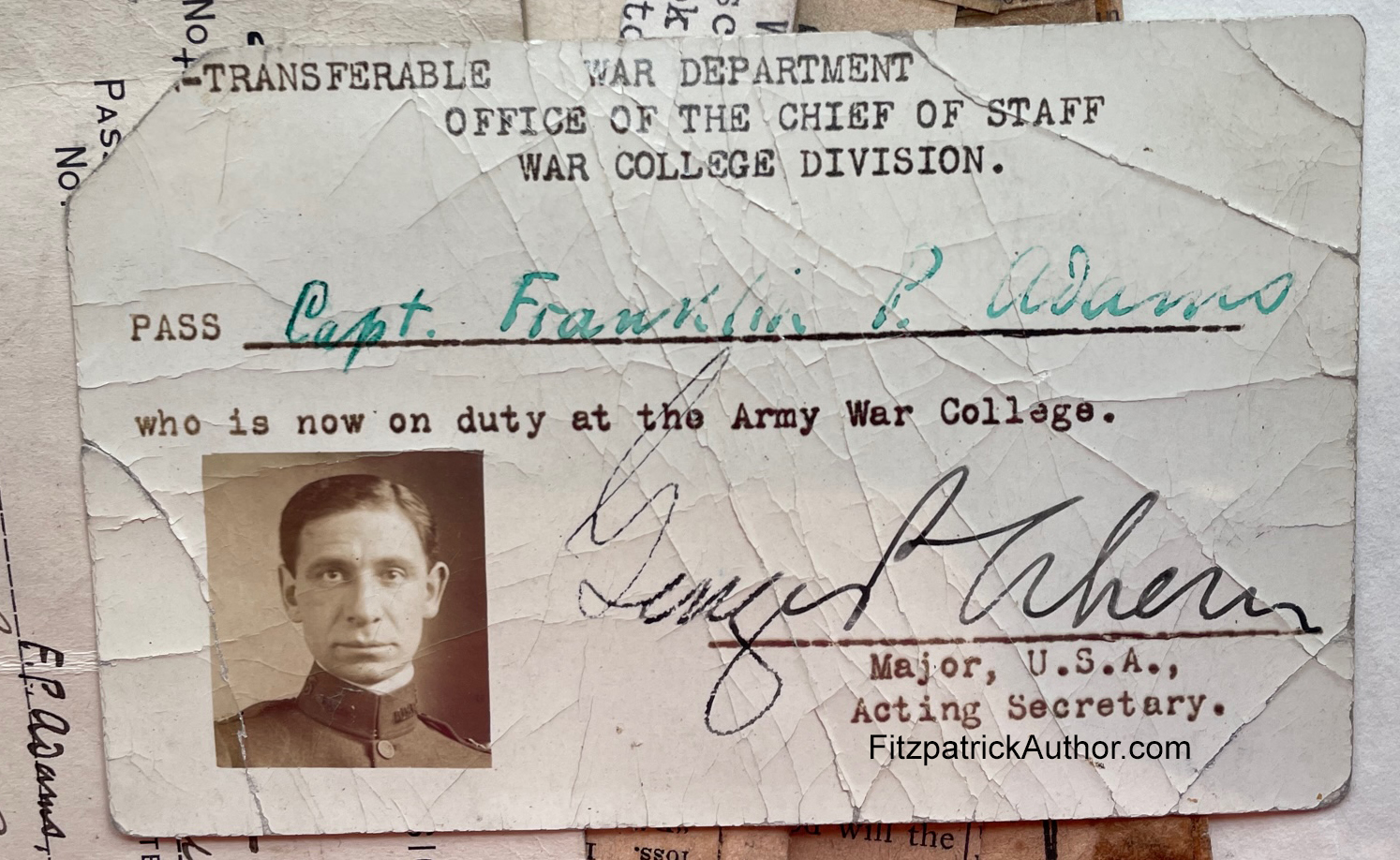
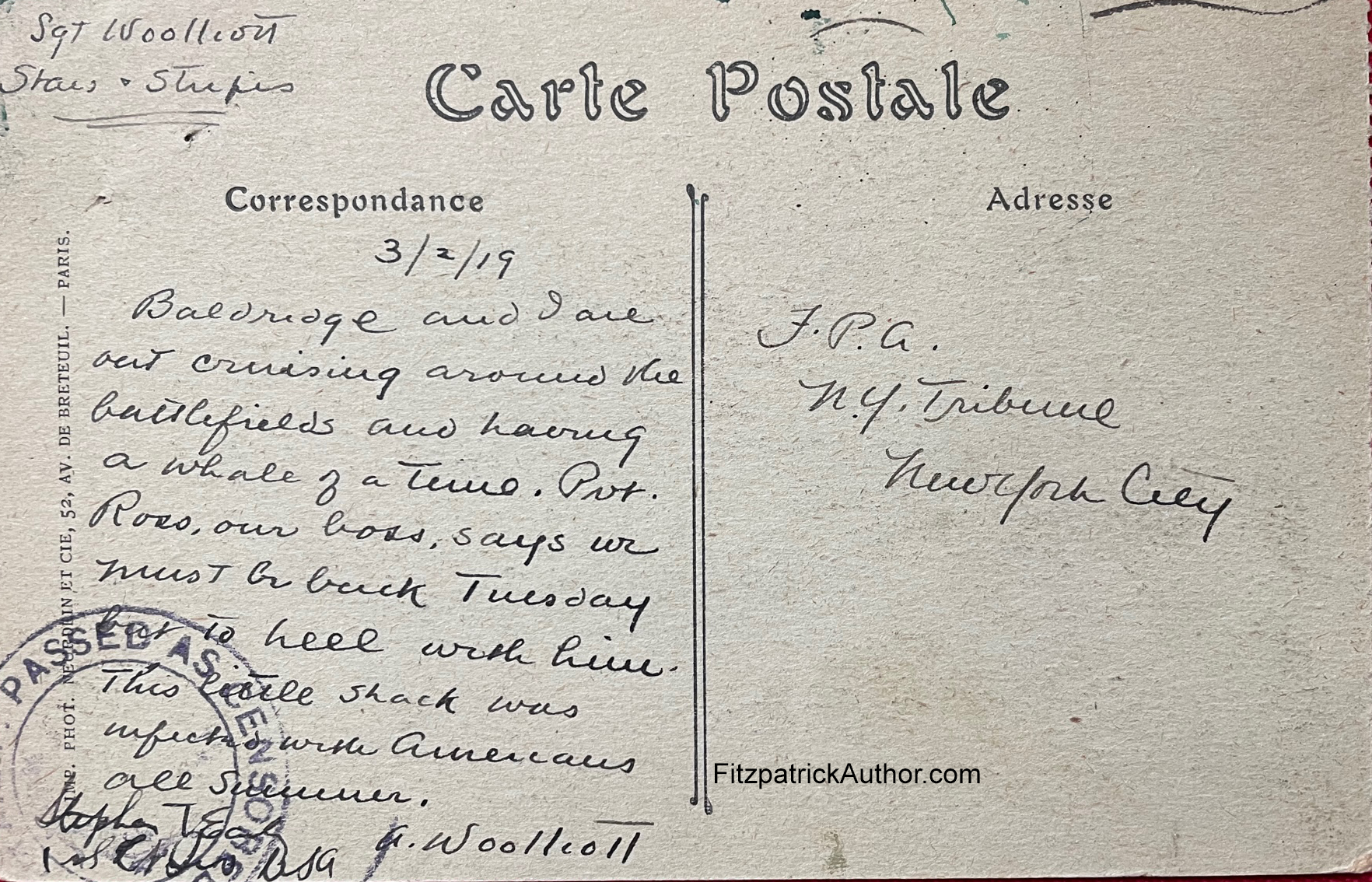
Noah sent us a fantastic tie of the Marx Brothers to the Algonquin Round Table. Harpo Marx was a member, and he was close friends with Dorothy Parker and Alexander Woollcott. Noah dug up the 1924 Robert Benchley review from Life, following the Broadway debut of the Marx Brothers:

We are happy to announce that the laughing apparatus of this department, long suspected of being out-of-date and useless, is in perfect running order, and can be heard any evening at the Casino Theatre during those magnificent moments when the Marx Brothers are participating in “I’ll Say She Is.” Not since sin laid it’s heavy hand on our spirit have we laughed so loud and so offensively. And as we picked ourself out of the aisle following each convulsion, there rang through our soul the joyful paean: “Grandpa can laugh again! Grandpa can laugh again!”

“I’ll Say She Is” is probably one of the worst revues ever staged, from the point of view of artistic merit and general deportment. And yet when the Marx Brothers appear, it becomes one of the best. Certainly we have never enjoyed one so thoroughly since the lamented Cohan Revues, and we will go before any court and swear that two of the four Marxes are two of the funniest men in the world.

We may be doing them a disservice by boiling over about them like this, but we can’t help it if we feel it, can we? Certainly the nifties of Mr. Julius Marx will bear the most captious examination, and even if one in ten is found to be phony, the other nine are worth the slight wince involved at the bad one. It is certainly worth hearing him, as Napoleon, refer ti the “Marseillaise” as the “mayonnaise,” if the next second, he will tell Josephine that she is as true as a three dollar cornet. The cornet line is one of the more rational of the assortment. Many of them are quite mad, and consequently much funnier to hear but impossible to retell.

There is no winching possible at the pantomime of Mr., Arthur Marx. It is 110 proof artistry. To watch him during the deluge of knives and forks from his coat-sleeve, or in the poker game (where he wets one thumb and picks the card off with the other), or—oh, well, at any moment during the show is to feel a glow at being alive in the same generation. We hate to be like this, for it is inevitable that we are prejudicing readers against the Marx boys by our enthusiasm, but there must be thousands of you who have seen them in vaudeville (where almost everything that is funny on our legitimate stage seems originate) and who know that we are right.

Do not miss this absolutely fun program of events around New York, all times to the centennial of “I’ll Say She Is.”
Related Post

Brock Pemberton

Brock Pemberton, From Kansas to the Great White WayBrock Pemberton, From Kansas to the Great White Way

Brock and Margaret Pemberton

Brock and Margaret Pemberton


Today is the anniversary of the birth of one of the most overlooked members of the Algonquin Round Table, namely, Brock Pemberton. His brother, Murdock Pemberton, gets barely more attention than his far more successful sibling. Let’s take a short dive into his life. All of the material is from The Algonquin Round Table New York: A Historical Guide.

It sounds like the story in a Broadway musical: hick conquers metropolis. However, this story was Brock Pemberton’s, and it really did happen that way. He went from Kansas newspaperman to powerful Broadway producer, and was the father of the annual Tony Awards.

Ralph Brock Pemberton was born December 14, 1885, in Leavenworth, Kansas. He grew up about 100 miles southwest, in Emporia, where his father worked as a salesman. He and his younger brother, Murdock, went to Emporia High School. Brock graduated in 1902 and attended the local College of Emporia for three years, before transferring to the University of Kansas. He got his A.B. degree in 1908 and returned home. Pemberton had known the legendary editor William Allen White of the Emporia Gazette since he was a boy, and White hired him as a reporter. Pemberton was a dynamo on the tiny staff.

Pemberton thrived on the Emporia newspaper under White’s tutelage. White had earned a national reputation for his provocative editorials, and made frequent trips to the East Coast. In the age-old way of newspaper employment, he spoke to a New York City editor on Pemberton’s behalf. With that, the 24 year-old booked a one-way ticket for Manhattan in 1910. Arriving on Park Row after a 1,300-mile train trek, he learned that the position was not going to materialize. But as luck would have it, someone gave him a note to hand to Franklin P. Adams, who was at the New York Evening Mail at the time. Just as F.P.A. would later stick his neck out for Robert Benchley and George S. Kaufman, he went to bat for Pemberton. He landed a job as a reporter.

After a few months Pemberton was transferred from the city desk to the drama department at the Mail. On his first assignment, he was sent to attend a musical called “Everywoman” at the Herald Square Theatre. Pemberton innocently reviewed the show as if he was an audience member in Emporia, with hilarious results. The staff found his hayseed review backslapping funny, and the edition became a collector’s item, to Pemberton’s embarrassment. He had to learn to be more hard-edged.

In 1911 he moved to the New York World drama desk, where he got to know the bustling theater business intimately. A few years later he was offered the position of assistant drama editor at the New York Times, working under Alexander Woollcott, who was the paper’s chief drama critic. His contacts grew. Pemberton had spent six years in New York journalism when producer Arthur Hopkins offered him a job in 1917. Hopkins was one of the most successful producers in the city, and Pemberton was put to work in every capacity, from set construction to directing. It was his new career.
Pemberton stayed in the Hopkins organization for just three years, but he learned the skills a producer would need. When Hopkins passed on producing a three-act comedy called “Enter Madame” in 1920, Pemberton asked if he could produce it. He took the biggest gamble of his life, and it paid off. The show ran for two years at the Garrick; he also directed the show. He was a newly minted Broadway producer at age 35. Soon after, Pemberton tapped Zona Gale to adapt her bestseller “Miss Lulu Bett” into a play, and he opened it two days after Christmas 1920. It was a smash success at the Belmont, and won the Pulitzer Prize as the year’s best drama the following year.

On Dec. 30, 1915, Pemberton married Margaret McCoy in East Orange, New Jersey. He was 30 and she was 36. She sometimes would work as a costumer on her husband’s shows.

In 1919, when the Round Table began, he was living at 123 East 53rd Street, between Park and Lexington avenues. The building has since been demolished. In 1918 he lived at 123 E. 53rd Street. He lived at 115 East 53rd Street in 1920, 1927, and 1931. In 1948 he was living at 455 E. 51st Street.

In 1925, the offices of Pemberton Productions, Inc. and Brock Pemberton, Inc. were at 224 West 47th Street. That building was demolished and is today the Hotel Edison, which opened in 1931.

Pemberton carved out a 30-year career in the theater business. He took on risky shows and had many hits, and several flops. He brought out the first plays by Maxwell Anderson and Sidney Howard. Among the many actors whose careers he launched onstage were Walter Huston, Miriam Hopkins, Claudette Colbert and Frederic March. In 1928 he lost $40,000 on a show, but bounced back the next year with the light comedy “Strictly Dishonorable” that began a long association with the actress-director Antoinette Perry. The pair had a string of hits together; some said they also had a long-running romantic relationship. The pair was among those that helped form the American Theatre Wing in 1939; the group put on the Stage Door Canteen shows for troops during the war. After Perry’s death in 1946, Pemberton pushed for the creation of the American Theatre Wing’s Antoinette Perry Awards for Excellence in Theatre — the Tony Awards.

Marxfest 4

Lineup for Marx Brothers Festival AnnouncedLineup for Marx Brothers Festival Announced

The Marx Brothers Festival Marxfest returns in May in time to celebrate the centennial of their first Broadway hit, I’ll Say She Is. There will be activities over May 17-19 in Manhattan and May 24-26 in Coney Island. Tickets go on sale April 2.

The lineup of events was revealed this week for what is the nation’s biggest and most complete celebration of the Marx Brothers. It follows ten years after the 2014 Marxfest by the same organizers.

Participants include Tony and Emmy nominee Robert Klein, The New Yorker staff writer Adam Gopnik, Marx Brothers biographer Robert S. Bader, New York Times comedy columnist Jason Zinoman, performer and director Frank Ferrante, revivalist Noah Diamond, author of “The Marx Brothers Miscellany” Trav S.D., and Groucho’s grandson, Andy Marx.

“This edition of Marxfest features more than twenty events, headlined by Marx Brothers experts, celebrated authors and journalists, and showbiz legends,” Diamond said. “It’s been a hundred years since the Brothers made their Broadway debut, but their influence on the culture of New York City goes on and on.”

Trav S.D. opined, “The greatest convocation of dyed-in-the-wool Marx Brothers lovers since the Jazz Age — and with more bearded professors than Horse Feathers!”

Marxfest 1
Programming for May 17 includes “Out of Line: Al Hirschfeld Draws the Marxes & Friends” presented by Katherine Eastman the Al Hirschfeld Foundation archives manager, Adam Gopnik on the relationship between Groucho and S.J. Perelman, and “Unheard Marx Brothers” audio rarities by archivist John Tefteller. The Party of the First Part, which features music by Josh Max, will close out the opening day celebrations.

Marxfest 2On May 18, events will include “Saturday Morning Cartoons,” an animated look at the Marxes; Trav S.D.’s salon “The Marx Bros: Vaudeville, Silent Film & Broadway;” “You Brett Your Life, a Marx trivia hour hosted by Brett Leveridge;” The Marx Brothers on Broadway Walking Tour with Noah Diamond; and “The Herring Barrel Revue” cabaret.

Marxfest 3May 19 programming includes Robert Bader’s overview of the Marx Brother’s 1914-15 tour in “Home Again;” a conversation between Jason Zinoman and Robert Klein; a look at I’ll Say She Is with Noah Diamond; and a screening of the 1933 film Duck Soup followed by a talk with Adam Gopnik and Noah Diamond at the landmark United Palace Theatre in Washington Heights.

On May 20, Vince Giordano & The Nighthawks will present “A Night of Marx Brothers Era Music” at Birdland.

Marxfest 4From May 24-26, the festival will continue programming on Coney Island. Events will include “An Evening with Marx & Ferrante” (Andy Marx and Frank Ferrante); a burlesque tribute to the Marx Brothers by Jonny Porkpie titled “A Day on the Boardwalk, A Night at the Stripshow;” Robert Farr’s “The Wisecracks Around Here Were Not Appreciated” at the Coney Island Museum; astrologer Kathy Biehl’s “Marxes in the Stars: The Astrology of The Brothers & Their Mother;” Trav S.D.’s “The Marx Brothers, Coney Island, and Sideshow;” a celebration of Harpo Marx’s artistry, and more.

Visit Marxfest.org for more information or to purchase tickets, which go on sale April 2.

Heywood Broun

Heywood Broun on Being Fired in the Spring, Summer, and Winter (Summer is Best)Heywood Broun on Being Fired in the Spring, Summer, and Winter (Summer is Best)

Heywood Broun

Heywood Broun

This is one of the very last columns that Heywood Broun ever published. Broun ran his own bi-weekly newspaper, Nutmeg (later called Broun’s Nutmeg) in Stamford, Connecticut, where he resided. It was in operation in the late 1930s, and was concurrent as he wrote a syndicated column “It Seems to Me” for Scripps-Howard and organized the Newspaper Guild. After his contract was allowed to lapse in late 1939, he moved to the New York Post. He only had one column appear in the paper, as he succumbed to pneumonia on December 18 at age 51. This column was written ten days before his death.

Old Newspaperman
By Heywood Broun
December 9, 1939

It happens suddenly. On a Tuesday, perhaps, you’re sitting around kidding back and forth in the City Room and maybe growing reminiscent about some story you covered quite a long time back. Yes, that’s the way it was. It gave an opening to a young squirt reporter and he said, “Uncle Heywood, how did you like Jenny Lind’s first concert?”

Now naturally I never saw Jenny Lind but I did ride in horse-driven buses on Fifth Avenue and I saw Admiral Dewey come parading across Washington Square and we all hollered because he had won the Battle of Manila and made America a world power.

Everybody got to calling me Uncle Heywood and at the drop of a hat I could be induced to talk about Matty and the old, old Giants. And when the mood gripped me I would even go back to the days of Dan McGann. You can always spot an old newspaperman by his tendency to talk and write of things in the past. Every one of us will insist that they don’t grow fighters like Fitzsimmons any more.

There isn’t any set time for becoming an old newspaperman but around fifty is the dangerous age and at fifty-one the line is definitely marked as the groove on the floor of the Alamo.

I’ve been fired in the Spring, the Summer and early Winter. I like it best in the Summer. Three times in thirty-one years isn’t so much to be fired. The first firing is often worse than the last. It’s very discouraging to get canned when you’re young. That’s the way it was with me. I was twenty-one and working on the Morning Telegraph. My stall in the old Eighth Avenue car barn was right next to Bide Dudley. He was getting $35 a week and my salary was $28. I wanted $30 but when I asked for it they fired me.

The next job was a long time coming. Fortunately I was a man of character and living at home and so I didn’t go into insurance or business but just borrowed money from my father and sat around for six months doing nothing. Eventually Burdick gave me a job on the Tribune.

He was a shy city editor and when he mentioned the salary he didn’t want to pronounce the fatal words. He gazed away off at a distant window and wrote on a piece of scratch paper $25. Newspaper work is like that. You can go perfectly straight down once you are over the top of the mountain but detours are necessary as you come up from the valley.

As a matter fact it was a mountain which made me. Burdick gave me the Tribune job on the strength of a recommendation from Fred Pitney, his star reporter. Pitney remembered that when I covered the E. H. Harriman death watch for the Evening Sun, I had crawled up through the woods at Arden and come right to the door of the big house. Getting there didn’t get me anything but a boot from the butler. Still after a year and a half Pitney remembered me as an energetic young man. I’ve seen that hill since and now I couldn’t walk it let alone make the grade on my belly.

Pretty nearly ten years went by before I got fired again. The World did it. I had gone onto the paper on my own volition and through the seductive influence of Mr. Swope.

The Sacco-Vanzetti case has something to do with it but only indirectly. First of all I went on a one-man strike because they said I wasn’t to write about the case anymore. They didn’t disagree with my opinions but they objected to violence of language. “Is Harvard to be known hereafter as Hangman’s House?” Was the sentence which made the trouble.

At the end of six or seven months the good shoemaker and the poor fish peddler were dead and things were patched up for me to go back to the paper. Getting fired was something of a surprise. Being bereft of topics I dashed off a little masterpiece for The Nation saying that I thought the editorial policy of The Morning World was a shade on the timid side. I believe I said, “The World on numerous occasions has been able to take two, three, or even four different stands with precisely the same material in hand. So constant were the shifts during the Sacco-Vanzetti case that the paper seemed like an old car going up a hill.”

Naturally I didn’t expect the editors to like it but after all The Nation isn’t so big and umbrage wasn’t in the scope of my vision. Blithely on the way home I bought a morning paper but I only looked at the sport page. Arriving home I was asked as I came in the door whether or not I had read The World. “Sure,” I replied, “Yankees win, Giants win, Dodgers lose.” Those were the old, old Giants.

“But have you seen your own page?” my wife persisted.

“I’m saving that up for later,” I told her.

“You needn’t,” she said, “you’re fired.”

And so I was. There in my old spot was a box explaining that Mr. Broun had been dropped on account of disloyalty. I did object to the word a little because the casual reader would hardly know whether I had robbed the till or sat on the editor’s hat.

Still it was Summer and I was full of energy and I went around opening my shirt to show my scars and having a fine time in general. And presently I got a job with Scripps-Howard which lasted eleven years. This ran out in the Winter.

Since Nutmeg is a publication which belongs to what the Parisians wittily call “Le Presse Confidentiale,” or French to that effect, I think I may reveal that the farewell conference with Roy W. Howard passed off in entire peace and amity.

He said, “I’ve talked it over with my associates and we’ve decided not to make you an offer. It would be just too much grief. The price of newsprint is going up and we think the place to cut expenses is among the high price specialists in order to protect the run of the mine reporter.”

“Roy,” I said (all Scripps Howard executives are known by the first name even to the humblest employee), “I can’t possibly make any squawk about that because I’ve made that same speech myself at dozens of Guild meetings.”

And so we shook hands and had a drink and everything was very pleasant. But I still think it is better to be fired in the Summer.

For more about Heywood Broun and his newspaper career, be sure to get a copy of The Algonquin Round Table New York, A Historical Guide (Globe Pequot Press).