Travel by the Book TV is Duane & Rachel Andersen who are reading and traveling. They love to visit spots that are associated with their favorite books and authors. This is about the Algonquin Round Table and features many of the names.
Travel By the Book TV on Vicious Circle
Categories:
Related Post
The Round Table Centennial SummerThe Round Table Centennial Summer
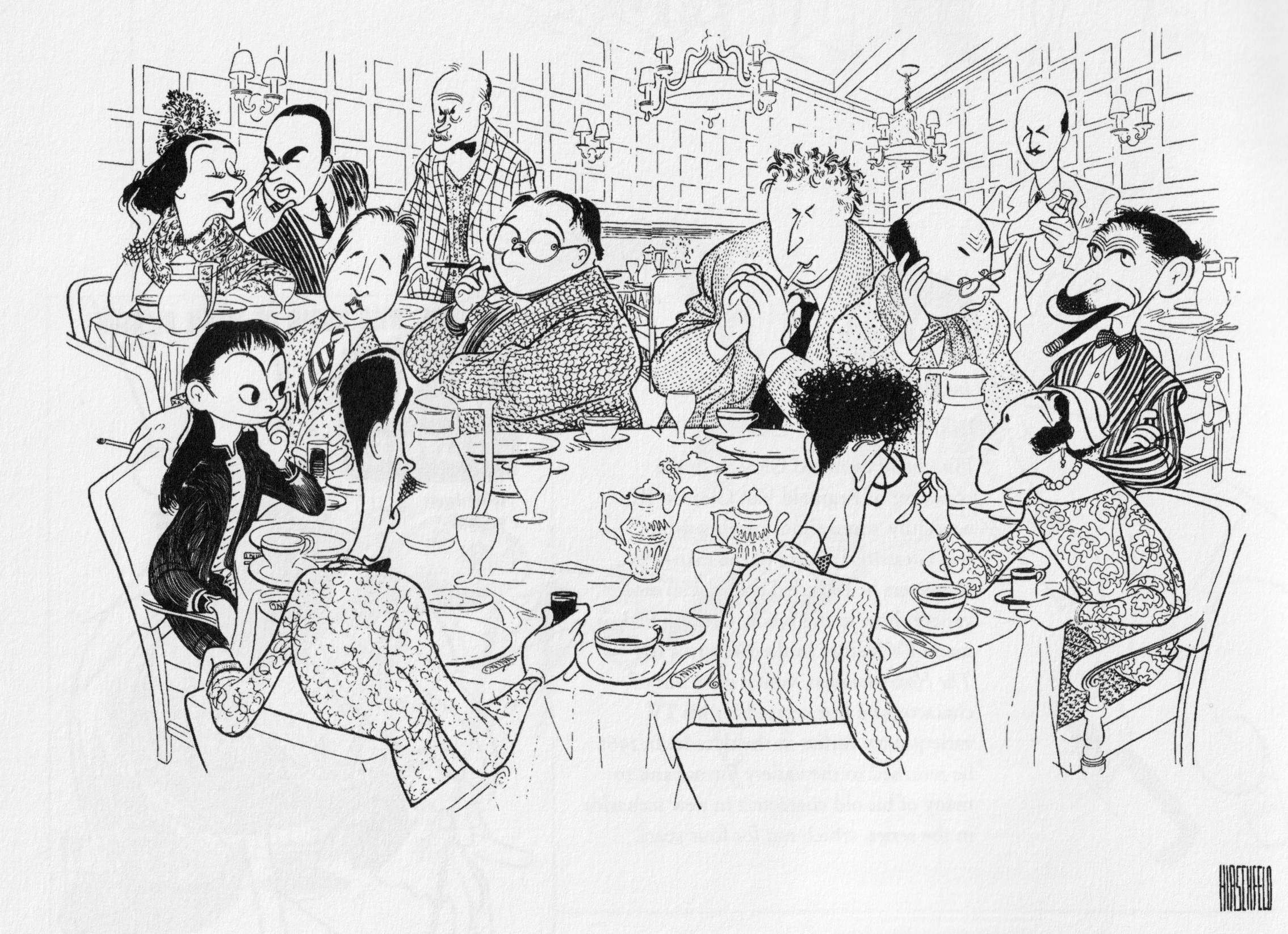
The Algonquin Hotel is not going to let the centennial of the first luncheon of the Algonquin Round Table pass without notice. The national literary landmark has planned an entire summer of events to celebrate the Vicious Circle, which began as a welcome home roast for critic Alexander Woollcott in June 1919.
To mark the occasion, the hotel is having a special $19.99 lunch menu every day until Labor Day, live music on Thursdays and Saturday nights, and a poet in residence in the lobby on Fridays. You can also attend, and participate in open mic poetry readings. The full hotel schedule is here. There will be weekly history walking tours at 3:00 p.m. on Wednesdays, meeting in the lobby, the schedule and advance ticket link is here.
The hotel is hosting five evening curated dinners on Wednesday nights at 6:00 p.m. in June and July. Each week a different New York expert will be featured that is in keeping in the spirit of the Algonquin Round Table and its members. Book your spot in advance on Open Table for cocktails and dinner, noting the night you wish to attend.
Wednesday Night Schedule for the Round Table Room Restaurant
6:00 p.m. cocktails at the Round Table
6:30 p.m. seat for dinner
7:30-8:00 p.m. dessert and Round Table talk.
Guests must have dinner reservations. Reserve your seat in the Round Table Room here (note the date & time at 6:00).
These experts are in the spirit of the Vicious Circle and will be talking about topics in the vein of the legendary members of New York’s most famous group of friends. Come for cocktails and dinner and enjoy a look at the worlds of current New York City through writing, music, comedy, and the most-beloved pastime of the group: high-stakes poker.
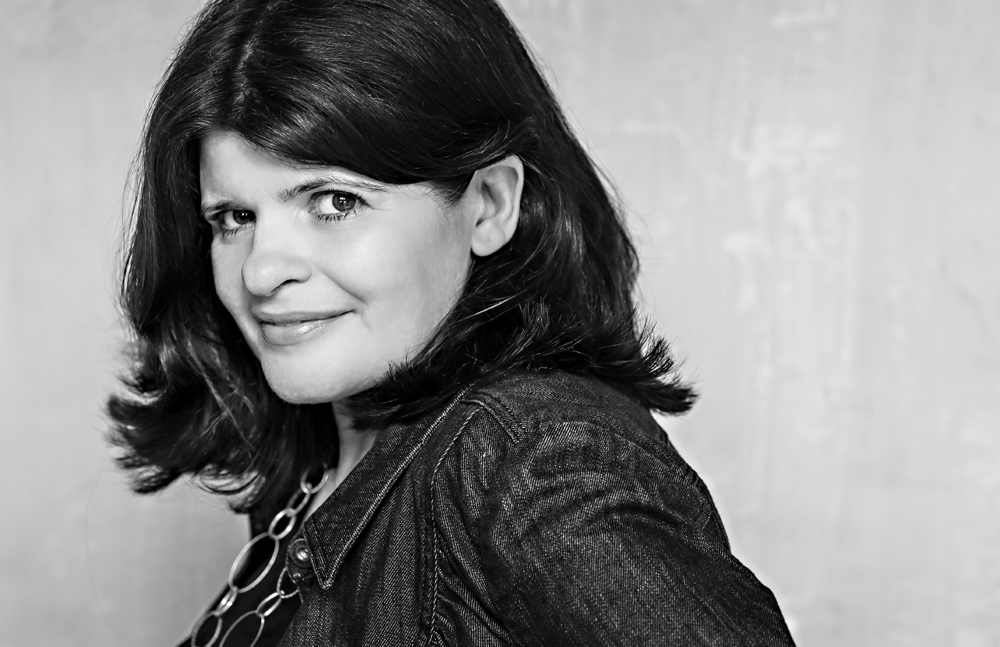
June 12
Laurie Gwen Shapiro – Writing
Laurie Gwen Shapiro is a native of New York City’s Lower East Side. She has most recently written articles for publications including The New Yorker, New York Magazine, The Daily Beast, Lapham’s Quarterly, Slate, Aeon, Los Angeles Review of Books, and has her own history column focusing on unsung heroes for The Forward. Laurie is also a documentary filmmaker who won an Independent Spirit Award for directing IFC’s Keep the River On Your Right: A Modern Cannibal Tale and an Emmy nomination for producing HBO’s Finishing Heaven. The Stowaway is her first non-fiction book. It’s the spectacular, true story of a scrappy teenager from the Lower East Side who stowed away on the Roaring Twenties’ most remarkable feat of science and daring: an expedition to Antarctica.
Book your spot in advance here.
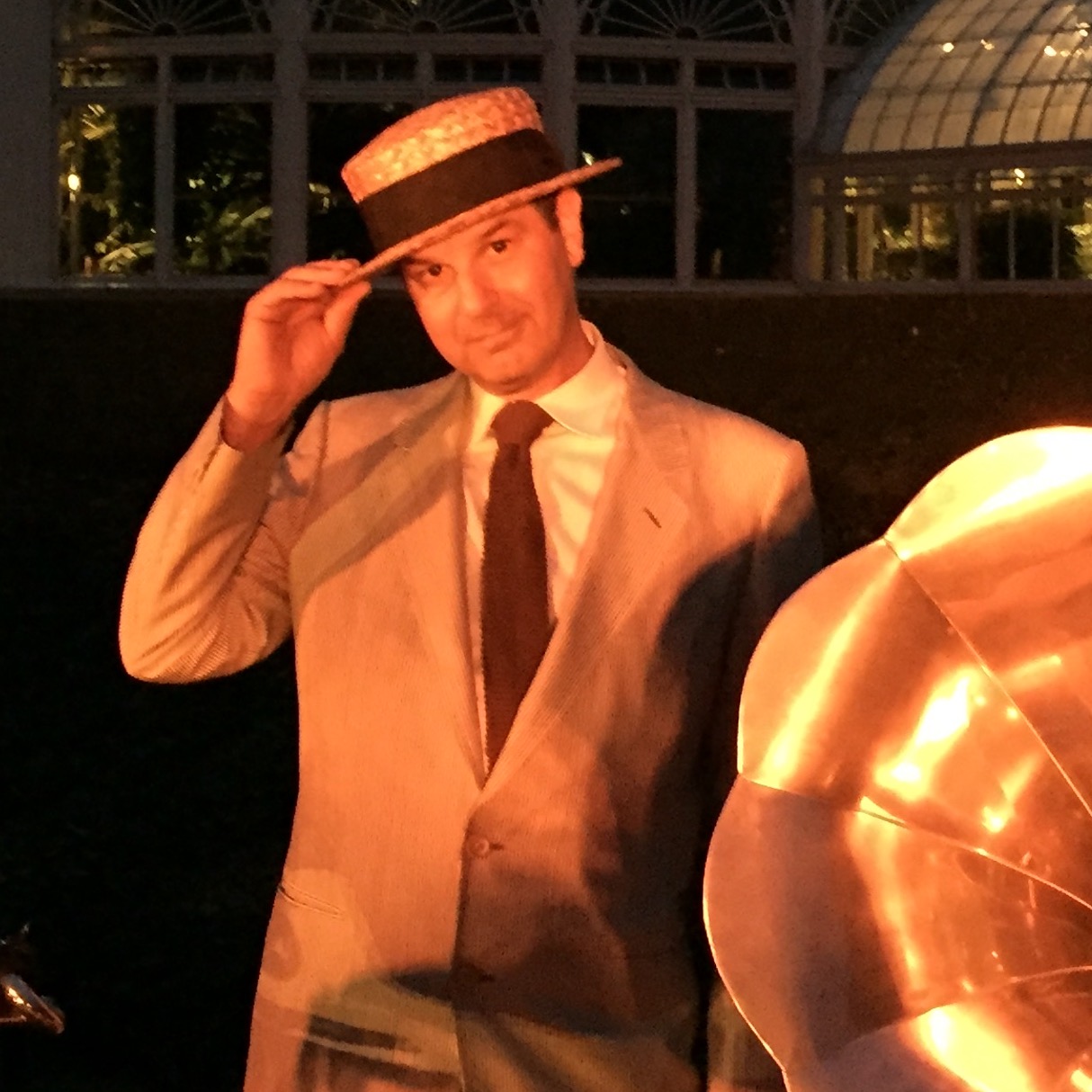
June 19
Michael Cumella – Music
Creator of the “Gramophone DJ” concept, Phonograph DJ Michael Cumella brings two 1905 disc phonographs and plays 78’s circa 1900-1929 for an engaging musical experience. The music ranges from ragtime to dance bands, instrumentalists to songsters. Visually fascinating and very entertaining, the presentation creates a wonderful atmospheric ambiance. As host of WFMU Radio’s Antique Phonograph Music Program since 1995, he is a leading expert on this period of culture and music. Michael will bring to the hotel a vintage phonograph and play original music from 1919.
Book your spot in advance here.

June 26
Noah Diamond – comedy
The #1 source for comedy knowledge of the Algonquin Round Table era is Noah Diamond, a writer, performer, producer, and raconteur. He’s the award-winning creator of the off-Broadway Marx Brothers revival I’ll Say She Is and has written and lectured extensively about the Brothers and their work, including a multimedia comedy lecture. This fall his brand-new show 400 Years in Manhattan will debut at the United Solo Theatre Festival in Manhattan on Theatre Row.
Book your spot in advance here.

July 10
Kevin C. Fitzpatrick – history
The author of 8 non-fiction books tied to NYC history, including The Algonquin Round Table New York: A Historical Guide and Under the Table: The Dorothy Parker Cocktail Guide, Kevin C. Fitzpatrick started the Dorothy Parker Society 20 years ago. He has been leading walking tours of the Vicious Circle haunts and hangouts since 1999. His talk will be about the women of the Round Table. So many know of Parker and Edna Ferber, but not many can recall Jane Grant, Margalo Gillmore, Ruth Hale, Neysa McMein, Beatrice Kaufman, or Peggy Wood.
Book your spot in advance here.
July 17
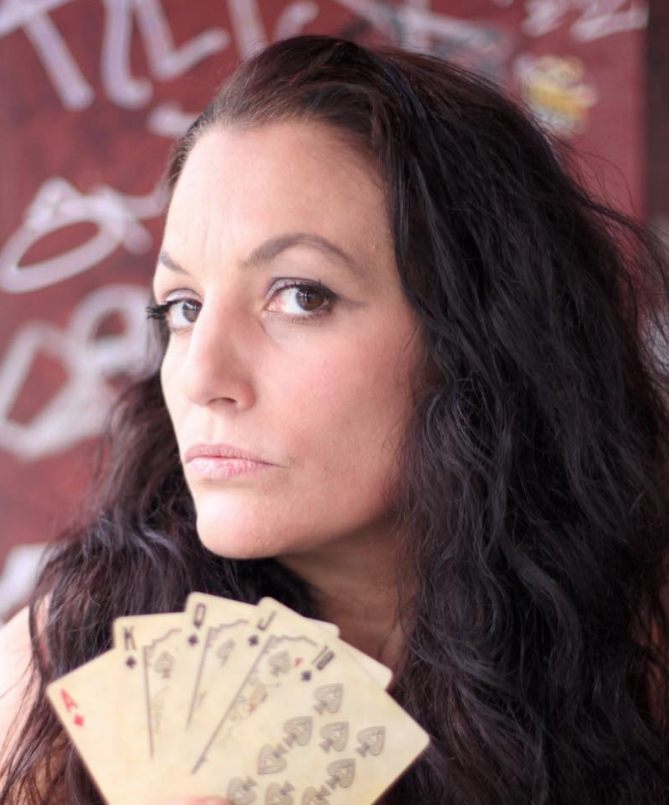
Joanna Holliday – poker
The World Series of Poker is the biggest gambling event of the year in the United States. Joanna Holliday is a professional poker player and has competed numerous times in big stakes tournaments across the country. She’s also a wit, fast-talker, and podcaster. For 25 years she’s been slinging drinks at Doc Holliday’s in the East Village. Since the majority of the Round Table were addicted to cards, she’s going to be talking about how to play poker and win, as well as what it takes to maintain your balance and wellness in such a stressful competition.
Book your spot in advance here.
The Algonquin is also offering special room packages, so why not spent a few nights in the most famous hotel in the city? Click here for more information. The events go all summer, and there will be more events in the fall as well. If you have any questions, contact us.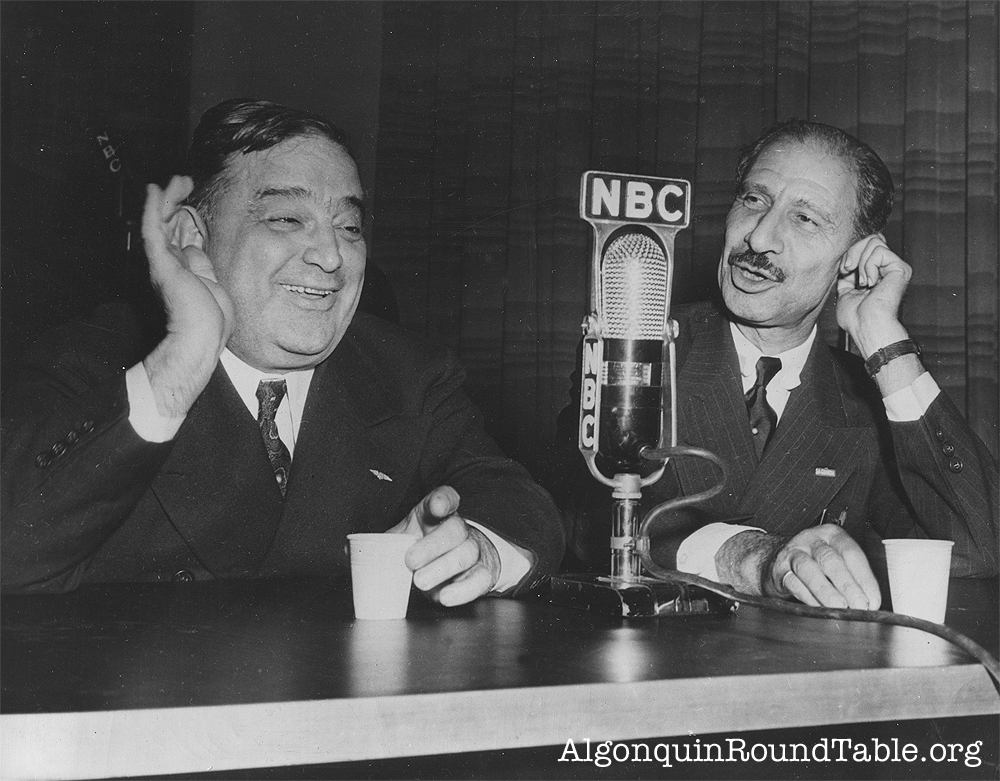
Radio Pioneers of the Algonquin Round TableRadio Pioneers of the Algonquin Round Table
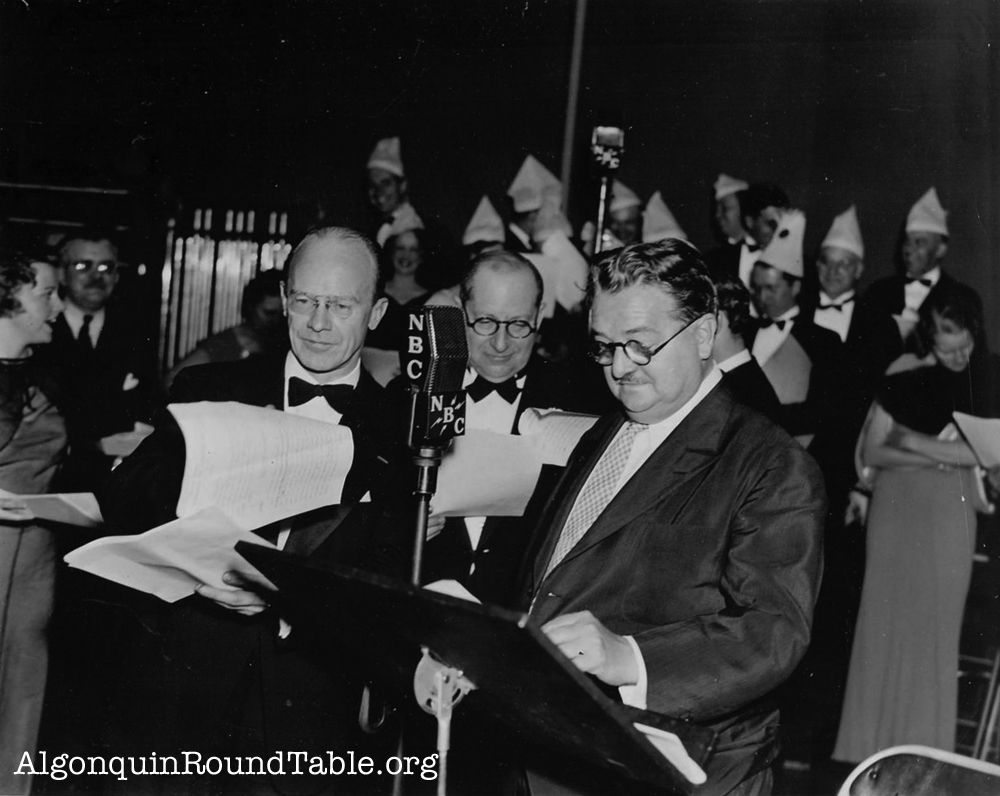
Deems Taylor, composer Sigmund Romberg, and Alexander Woollcott in the studio, circa 1935.
It turns out that there were members with careers that stretched from silent pictures to live television, such as actresses Margalo Gillmore and Peggy Wood. Robert Benchley made the first all-talking short, The Treasurer’s Report, released in March 1928 by Fox. Marc Connelly and Dorothy Parker both wrote captions and scenarios for the silents, then later jumped into writing plays and talkies.
But if there is one format that most of the members drew paychecks from after the Round Table ended, that’s radio. Many members of the group appeared as guests, commentators, writers, or actors. Benchley and Parker had their short stories adapted for dramatizations. Harpo Marx whistled his answers on-air. Others made the transition from newspapers to microphones, trading on their popularity as writers.
The book has more than 100 locations around the New York area tied to the lives of the “Vicious Circle” that met at the Algonquin Hotel on West Forty-fourth Street. Here are three spots from their radio days, all within walking distance of the Round Table.
New York City Mayor Fiorello La Guardia and Franklin P. Adams on Information Please.
NBC, 30 Rockefeller Plaza
Franklin P. Adams was a veteran newspaper columnist with 35 years’ experience when his services were no longer needed. Radio saved him, and a quiz show was the last hurrah of his brilliant career. In 1937, the Herald Tribune didn’t renew his contract. With an encyclopedic knowledge of literature and trivia and a family of five to support during the height of the Great Depression, the offer to be a regular panelist on a radio quiz show came as a blessing.
The format of Information Please was simple but brilliant. Listeners mailed in questions. If the question stumped a panel of experts, the listener won a small cash prize. The show was unrehearsed and conducted before a live studio audience. The 30-minute program moved like lightning, and experts and guests had to answer quickly. On May 17, 1938, Information Please debuted on the NBC Blue Network (later ABC). Clifton Fadiman, a literary critic who wrote for The New Yorker, was master of ceremonies. The show was an overnight success, and more than 25,000 questions poured into the studios.
One question put to F.P.A. in 1938 was to finish the Joe Miller gag, “Who was that lady I saw you with last night?” To which he replied, “There are two answers: That was no lady, that was my wife. And the other is that was no lady that was your wife.” The show continued for ten years, mostly on NBC. Over time, just about every Round Table member appeared as a guest.
NBC has always been associated with Rockefeller Center. John D. Rockefeller Jr., son of the founder of Standard Oil, owned the land and helped create the landmark. The area bounded by Fifth and Sixth avenues from 48th to 51st streets contained numerous speakeasies before demolition in 1930. NBC has called 30 Rockefeller Plaza home since the building was completed in 1933, spanning corporate ownership from General Electric to Comcast. More than a dozen buildings form the complex today, with “30 Rock” as centerpiece. Radio studios were the original tenants (hence Radio City) and now television studios. The Art Deco buildings are landmarks inside and out.
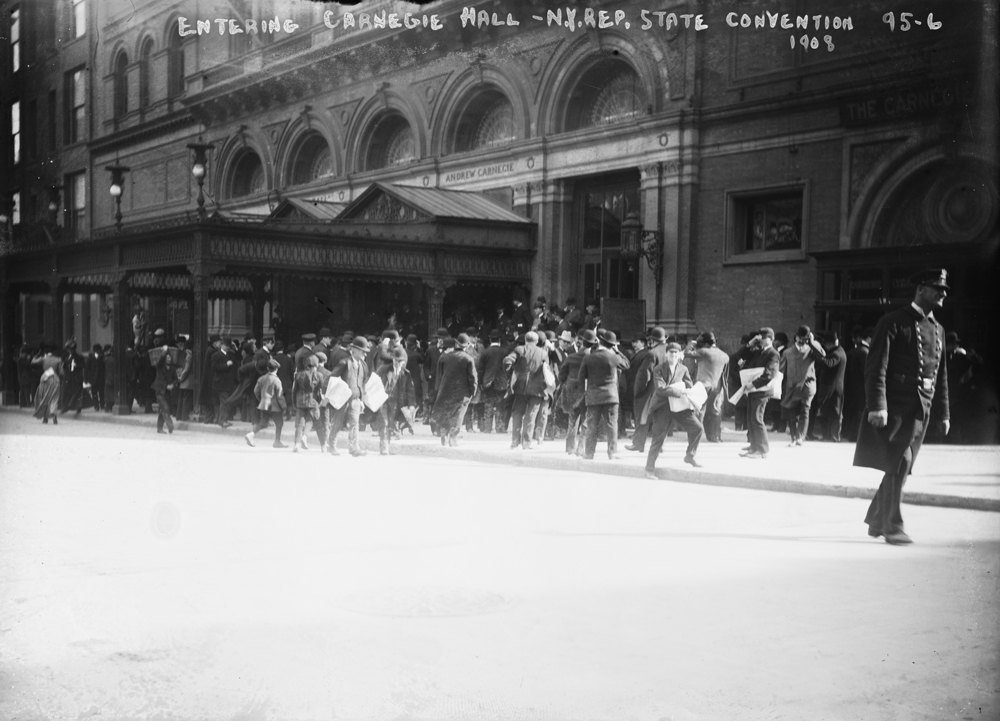
Carnegie Hall.
CBS, Carnegie Hall, 881 Seventh Avenue
When radio networks became national broadcasters in the late 1920s, some of the live programming was classical music. Symphonies and orchestras dominated as networks tried to reach upper class listeners. William S. Paley signed the New York Philharmonic to CBS in a major coup and gave the network enormous prestige.
Beginning in 1936, Deems Taylor served as commentator during intermissions. Already a star composer and conductor, he had been a newspaper music critic but never a broadcaster. His role at CBS was an enormous success, and Taylor found himself giving weekly music lecturers to a huge audience during Sunday afternoon concerts in Carnegie Hall. He helped listeners understand what they were hearing and helped a generation appreciate classical music. Taylor also introduced listener questions, interviewed orchestra members during intermissions, and brought the whole experience of classical music into the nation’s living rooms. A broadcaster for more than ten years, Taylor became the country’s best-known authority on music.
The building was saved from a wrecking ball in 1960 and underwent multi-million dollar renovations in recent years. Today the Isaac Stern auditorium, the main performance hall, seats 2,800.
CBS, 485 Madison Avenue
Alexander Woollcott loved to pontificate. He was a ham, a showman, and a natural as a radio broadcaster. He also notoriously recycled magazine articles and sold them to two and even three publications. Getting a radio show allowed him to retell those same stories to another audience and saved his career. From 1930 to 1943, Woollcott worked on the top floor in Studio One of the CBS Building. He was “The Town Crier” on panel discussion radio program, with national sponsorships. It was an early form of talk radio, with notable guests brought in and Woollcott acting as a moderator.
On January 23, 1943, a few days after he turned 56, Woollcott suffered a stroke during a live panel discussion. He was carried out of the CBS studios in his chair and brought to Roosevelt Hospital, but it was too late. A week later, a memorial service was held at Columbia University’s McMillan Academy Theatre.
In 1930, the 24-story Columbia Broadcasting Building was completed for the two-year-old CBS radio network at 485 Madison Avenue to designs by J. E. R. Carpenter. This was CBS’s home until 1965, when the company moved to the 38-story CBS Building designed by Eero Saarinen on Sixth Avenue and 52nd Street, nicknamed “Black Rock.”
***
Originally written for Cladrite Radio.