Algonquin Round Table History Crazy for Games, Sports, and Puzzles

Crazy for Games, Sports, and Puzzles

Woollcott and Ferber

Alexander Woollcott and Edna Ferber, at the home of Margaret Leech and Ralph Pulitzer (Photo courtesy of Kate Pulitzer Freedberg)


Sports and leisure were important to the Round Table. They loved professional sports—with baseball and boxing being the chief attractions. F.P.A. was an amateur tennis star. Their leisure time was taken up with parlor games, mind-benders, word play, and gambling. Their poker games were soul-crushing feats of gambling (Broun won and lost his house at a poker table). Charades and croquet consumed them.

Neysa McMein was credited with “inventing”—or at least popularizing—Scavenger Hunts. F.P.A. wrote about it in “The Conning Tower” on July 28, 1925:

“To Jane Grant’s, where was a party for Alice Miller’s birthday, and had a merry time of it, save for a silly treasure hunt, a craze that hath become widespread while I was not here to crusade against it.”

While playing I Can Give You A Sentence, Dorothy Parker was tasked to use “horticulture” which led to the oft quoted, “You can lead a horticulture, but you can’t make her think.” Baseball was a passion, especially New York Giants games at the Polo Grounds. F.P.A. wrote “Baseball’s Sad Lexicon” one of the most famous baseball poems of all time following a Giants game. Broun is in the Baseball Hall of Fame’s sportswriters wing in Cooperstown.

The friends were crazy for crossword puzzles; they even wrote a book of them together. On January 4, 1925, the first Intercollegiate Cross Word Puzzle Tournament was held in the auditorium of the Hotel Roosevelt, 45 East 45th Street. With hundreds of cheering fans in the audience, Yale edged out Harvard, Princeton and the City College of New York. On the Harvard team were Broun (who never really graduated) and Robert E. Sherwood. Poet Stephen Vincent Benet and Jack Thomas made up the Yale team. The contest was held in rounds and each word was tackled individually. First Broun won a round by correctly guessing the name of a German poet with five letters (Heine). Then Sherwood backed him up with a seven-letter word meaning “honest in intention” (sincere). However, a foul play was called when the judge, Ruth Hale, sat beside her spouse, Broun.

Related Post

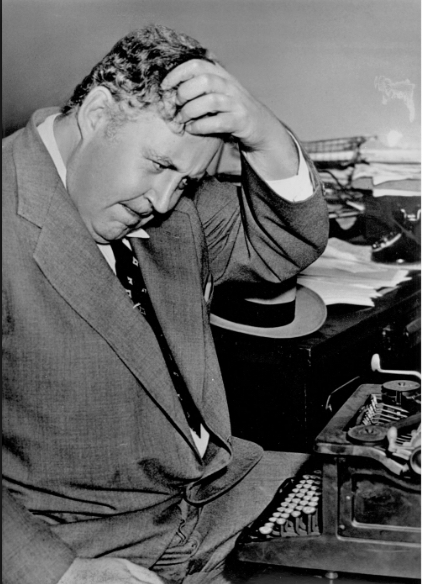
Heywood Broun on Babe Ruth in 1922Heywood Broun on Babe Ruth in 1922

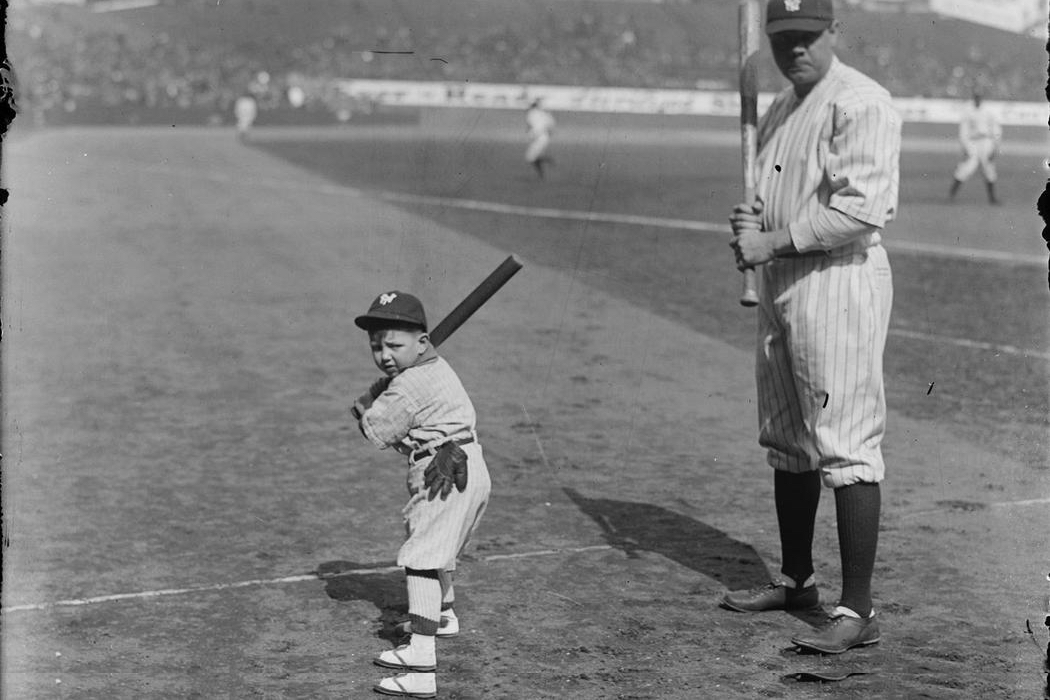
With baseball season around the corner, let’s look at one of the many Algonquin Round Table links to the game. In the world of New York newspaper columnists in the Jazz Age, Heywood Broun stood out from the rest. His column “It Seems To Me” was beloved, and he could tackle any subject. Broun had gotten his start as a baseball writer, and continued his passion for ballpark trips even when he became a celebrity covering Broadway and news stories. Broun had seats in the press box to watch Babe Ruth in his amazing 1921 season with the New York Yankees. This column appeared in 1922.

Ruth Vs. Roth
By Heywood Broun

We picked up “Who’s Who in America” yesterday to get some vital statistics about Babe Ruth, and found to our surprise that he was not in the book. Even as George Herman Ruth there is no mention of him. The nearest name we could find was: “Roth, Filibert, forestry expert; b. Württemberg, Germany, April 20, 1858; s. Paul Raphael and Amalie (Volz) R., early edn. in Württemberg—”

There is in our heart not an atom of malice against Prof. Roth (since September, 1903, he has been “prof. forestry, U. Mich.”), and yet we question the justice of his admission to a list of national celebrities while Ruth stands without. We know, of course, that Prof. Roth is the author of “Forest Conditions in Wisconsin” and of “The Uses of Wood,” but we wonder whether he has been able to describe in words uses of wood more sensational and vital than those which Ruth has shown in deeds. Hereby we challenge the editor of “Who’s Who in America” to debate the affirmative side of the question: Resolved, That Prof. Roth’s volume called “Timber Physics” has exerted a more profound influence in the life of America than Babe Ruth’s 1921 home-run record.
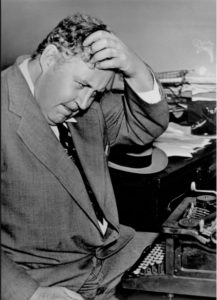
Heywood Broun

Heywood Broun

The question is, of course, merely a continuation of the ancient controversy as to the relative importance of the theorist and the practitioner: should history prefer in honor the man who first developed the hypothesis that the world was round or the other who went out and circumnavigated it? What do we owe to Ben Franklin and what to the lightning? Shall we celebrate Newton or the apple?

Personally, our sympathies go out to the performer rather than the fellow in the study or the laboratory. Many scientists staked their reputations on the fact that the world was round before Magellan set sail on the Vittoria. He did not lack written assurances that there was no truth in the old tale of a flat earth with dragons and monsters lurking just beyond the edges.

But suppose, in spite of all this, Magellan had gone on sailing, sailing until his ship did topple over into the void of dragons and big snakes. The professors would have been abashed. Undoubtedly they would try to laugh the misfortune off, and they might even have been good enough sports to say, “That’s a fine joke on us.” But at worst they could lose nothing but their reputations, which can be made over again. Magellan would not live to profit by his experience. Being one of those foreigners, he had no sense of humor, and if the dragons bit him as he fell, it is ten to one he could not even manage a smile.

By this time we have rather traveled away from Roth’s “Timber Physics” and Ruth’s home-run record, but we hope that you get what we mean. Without knowing the exact nature of “Timber Physics,” we assume that the professor discusses the most efficient manner in which to bring about the greatest possible impact between any wooden substance and a given object. But mind you, he merely discusses it. If the professor chances to be wrong, even if he is wrong three times, nobody in the classroom is likely to shout, “You’re out!”

The professor remains at bat during good behavior. He is not subject to any such vicissitudes as Ruth. Moreover, timber physics is to Mr. Roth a matter of cool and calm deliberation. No adversary seeks to fool him with speed or spitballs. “Hit it out” never rings in his ears. And after all, just what difference does it make if Mr. Roth errs in his timber physics? It merely means that a certain number of students leave Michigan knowing a little less than they should—and nobody expects anything else from students.

On the other hand, a miscalculation by Ruth in the uses of wood affects much more important matters. A strike-out on his part may bring about complete tragedy and the direst misfortune. There have been occasions, and we fear that there will still be occasions, when Ruth’s bat will be the only thing which stands between us and the loss of the American League pennant. In times like these who cares about “Forest Conditions in Wisconsin”?

Coming to the final summing up for our side of the question at debate, we shall try to lift the whole affair above any mere Ruth versus Roth issue. It will be our endeavor to show that not only has Babe Ruth been a profound interest and influence in America, but that on the whole he has been a power for progress. Ruth has helped to make life a little more gallant. He has set before us an example of a man who tries each minute for all or nothing. When he is not knocking home runs he is generally striking out, and isn’t there more glory in fanning in an effort to put the ball over the fence than in prolonging a little life by playing safe?

***

Adapted from The Lost Algonquin Round Table: Humor, Fiction, Journalism, Criticism and Poetry From America’s Most Famous Literary Circle (Donald Books/iUniverse). Edited by Nat Benchley and Kevin C. Fitzpatrick. Available Here.
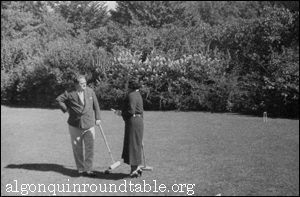
Frank and Bertha Case

I Found Frank CaseI Found Frank Case

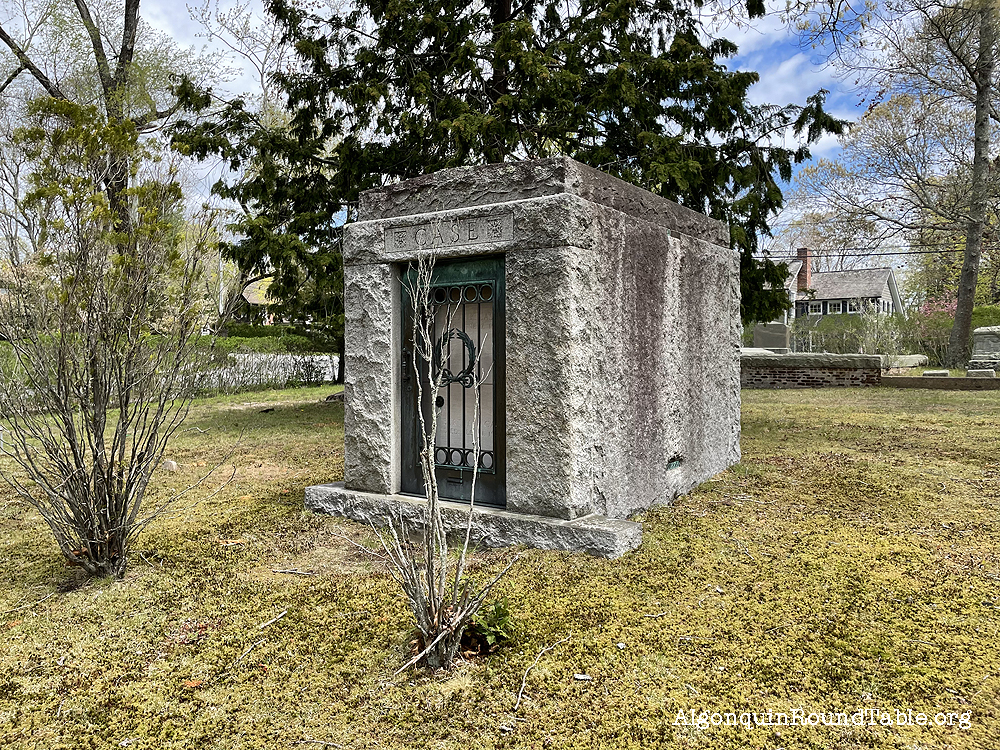
I found Frank Case. I wasn’t even looking for him. I was in Oakland Cemetery in Sag Harbor, Long Island, for the first time. I was actually looking for a Doughboy for our WWI Homecoming 21 project. As I was walking along the line of graves, since I didn’t know the location, I was peering at each one as quickly as possible. At the corner of the cemetery, in the corner of my eye, was a lone mausoleum. There are not that many in Oakland, just a few, it is not Woodlawn. As I stepped closer I saw the name across the top: CASE.

I was so happy to see this. Here was the general manager and owner of the Algonquin Hotel.

I had known for many years that Case (1871-1946) had a second home in Sag Harbor. He wrote about the home in his books, as did his only daughter, Margaret Case Harriman. While Case was the most famous hotelier in America at one time, I never knew where he ended up after his death in Manhattan. I assumed, wrongly, that he had gone home to Buffalo, New York, his hometown, and where his first wife, Carrie Case, was buried in 1908 after she tragically died in the Algonquin Hotel following the birth of their son, Carrol.

Frank and Bertha Case

Frank and Bertha Case

One thing I learned a long time ago was to never trust the Internet. When I was researching my book The Algonquin Round Table New York: A Historical Guide (2015) I was on a mission to track down the final resting places of the Vicious Circle. I did locate almost all 30 of them, but there are a few that still escape me (where are you Jane Grant and Robert E. Sherwood?). But I found many inaccuracies and misinformation. I made a pass at looking for Case; one lead was he was buried in Woodlawn, which was wrong. Many obituaries list New Yorker’s would hold their memorials in Woodlawn, then the remains sent away to other towns for burial. What I suspect is after his death, which was just four months after his second wife, Bertha, his family brought Bertha and Frank to the receiving vaults of Woodlawn. Here they remained temporarily while the mausoleum was constructed in Sag Harbor. I guess if I had 10 hours of free time I could check the records of both cemeteries, so perhaps if someone reading this wants to hire me for a paid assignment I will do that.

I like finding this mausoleum and closing the circle on Frank Case, who was by all accounts beloved by friends and staff (but was anti-union). He was also, like me, a member of The Lambs (the clubhouse was 2 minutes away west on Forty-fourth Street, and many of the actors who were members also lived at the hotel, such as John Drew and nephew John Barrymore).

One story told in the obituary of Bertha Case is about Sag Harbor. Bertha was a housekeeper at the Algonquin, which is how she met Frank. During WWI she volunteered and went to France with the YMCA as a volunteer, and was friends with superstar Elsie Janis (also an Algonquin regular). She and Frank were married for 30 years. What Bertha did was use the flower gardens at the Sag Harbor house to provide floral arrangements for the hotel–which she oversaw. Sag Harbor is also where the Case family entertained friends, such as Robert Benchley.

If you are in Sag Harbor and the South Fork of Long Island, pay a visit to Frank and Bertha Case.

Robert Benchley

Marking the 75th Anniversary of the Death of Robert BenchleyMarking the 75th Anniversary of the Death of Robert Benchley

Robert Benchley

Robert Benchley

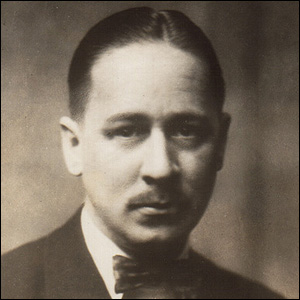
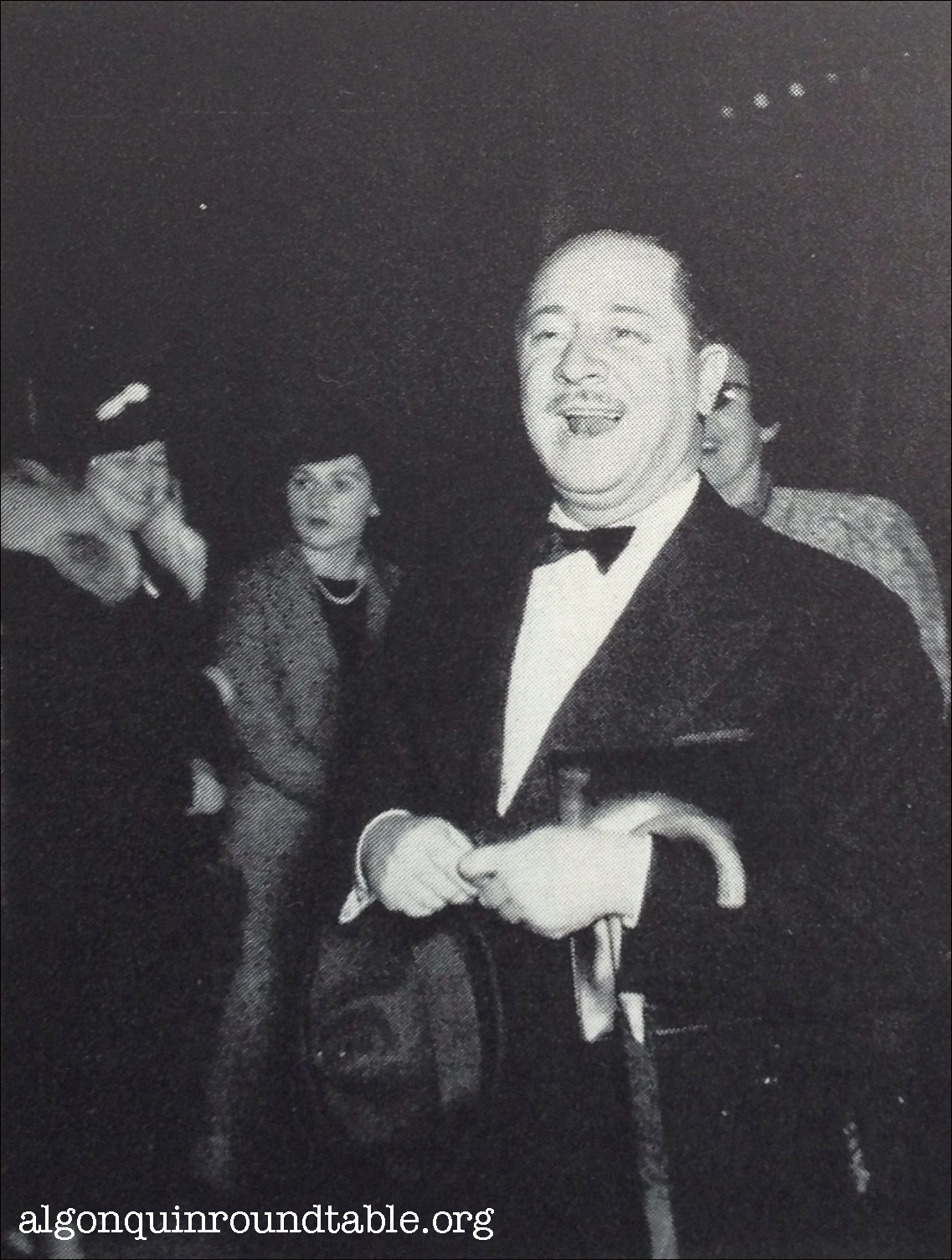
Seventy-five years ago today, hard-working Robert Charles Benchley died in his hospital room. He was just 56 years old. Benchley, once the country’s premier humorist, had stayed active until the end. In 1933, he began his first radio show, broadcast on CBS. He also appeared in 46 movie shorts between 1928 and 1945. Columnist Sidney Carroll wrote in 1942, “The movies get a comedian and the literary muse seems destined to lose her most prodigal son for good. Literature lost out because so many people in Hollywood think Robert Benchley looks much funnier than he writes. And they keep him busy looking at the cameras instead of writing for them.” At the time, Benchley was on the Paramount lot making two forgettable films: Out of the Frying Pan and Take a Letter, Darling.

Throughout World War II Benchley kept up an extremely busy pace in Hollywood. He lived in a bungalow in the Garden of Allah and worked steadily in movies and radio. In his early fifties Benchley eventually suffered from health problems exaggerated by his heavy drinking. He was diagnosed with cirrhosis of the liver and high blood pressure. In late 1945 he returned to New York for a break, but his health slid downhill. He collapsed in his room at the Royalton Hotel on West Forty-fourth Street. He died in the Harkness Pavilion at the Columbia University Medical center on Fort Washington Avenue, on November 21, 1945.

Following a private service his body was cremated and the ashes were given to his family. At the cemetery in Nantucket, however, the family discovered that the urn was empty. When the correct cremains were located, his ashes were interred properly. His headstone, chosen by his son, Nat, was carved with his New Yorker byline, an em dash before his name. His beloved wife, Gertrude, is buried next to him. She died in 1980.

Today, what is the legacy of Robert C. Benchley, 75 years after his death? Many of his humor columns were collected in best selling books. They are all long out of print. No major publisher is publishing his work; his words live on in digital archives maintained by his two most famous magazine affiliations, Vanity Fair and The New Yorker. His words do reach new audiences decades after his death; earlier this month the humorist and television writer Merrill Markoe told New York magazine that Benchley was a major influence on her style.

If anyone new to Benchley–born in the last 25 years–they would probably first discover him on TCM. His movies appear often. You can press a button and stream him right now on Disney+ and watch The Reluctant Dragon. The Robert Benchley Society, founded by David and Mary Trumbull in 2003, is the only organization keeping his spirit alive. Like some of his peers from the Algonquin Round Table–Marc Connelly, Deems Taylor, Alexander Woollcott–Benchley is teetering on being lost to history, remembered only by those hardcore old comedy fans that keep talking about him in the way we reminisce about things we’ll never see, such as Vaudeville and the Ziegfeld Follies.

Benchley was a teetotaller until he fell in with the Vicious Circle in the Speakeasy Era in his thirties. Twenty years later, drink did him in. Is it appropriate to raise a glass to him? Since we cannot sit at his table at “21” today, I think it’s more than appropriate, the milestone of today demands it.

For more about Robert Benchley, read The Algonquin Round Table New York: A Historical Guide (Lyons Press), out now in paperback.