Harpo Marx Humor

On This Date 1955: Harpo Marx in Leonard Lyons syndicated column 29 Aug 1955.
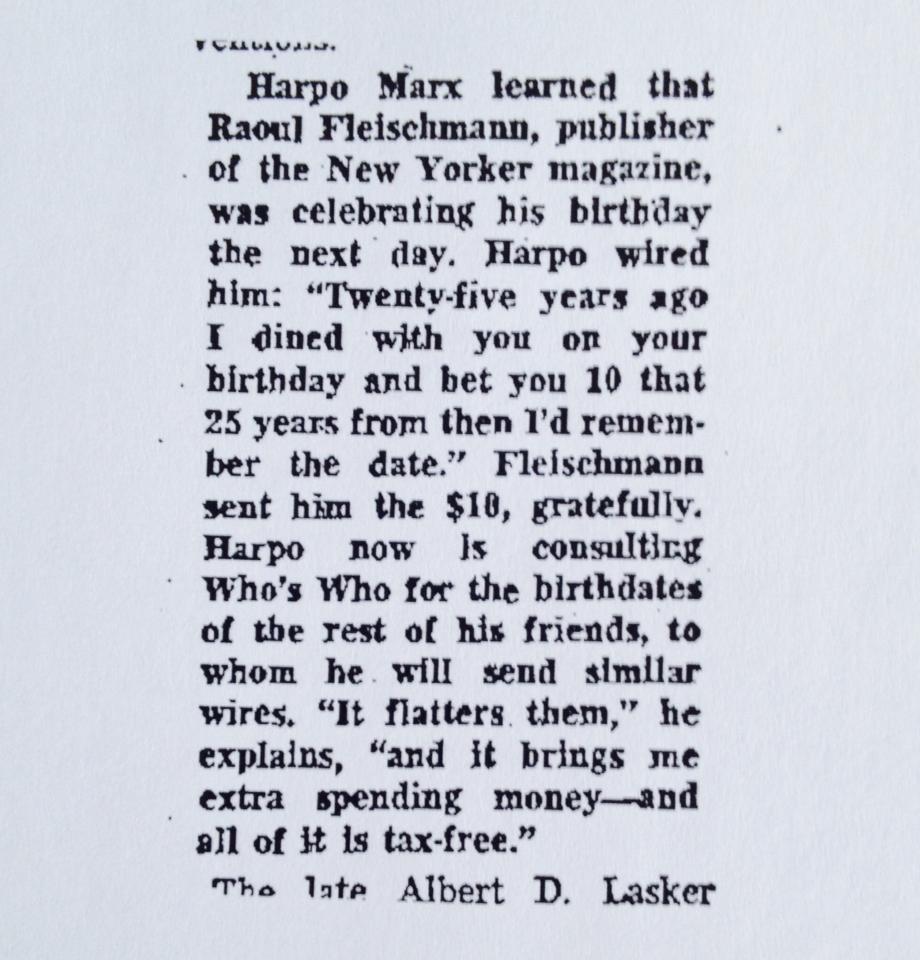
Leonard Lyons 1955
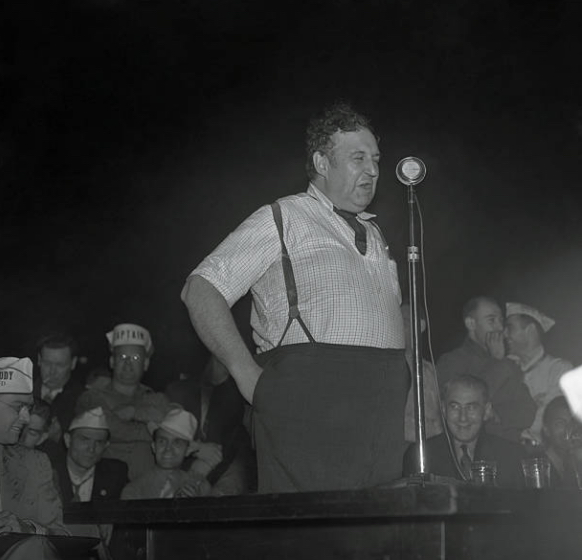
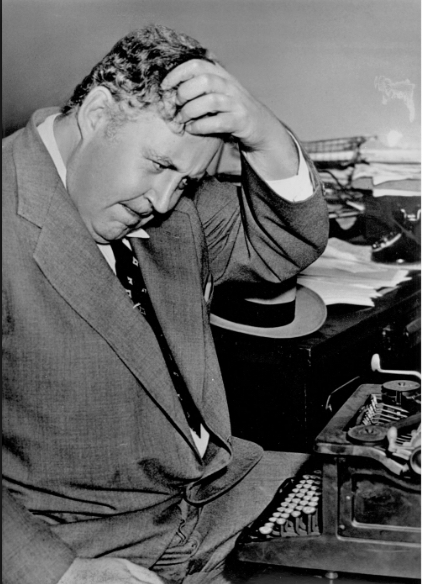
Leonard Lyons 1955

Related Post

Frank Sullivan Place

Frank Sullivan of Saratoga SpringsFrank Sullivan of Saratoga Springs

Frank Sullivan Home, Saratoga Springs

Frank Sullivan Home, Saratoga Springs


After the demise of the New York World in 1931, Algonquin Round Table member Frank Sullivan moved home to Saratoga Springs and became the ultimate freelancer. In a small clapboard house shared with his sister at 135 Lincoln Avenue, he turned out marvelous humor pieces for the rest of his career. “Once I visited New York for twenty years but I wouldn’t live there if you gave me Philadelphia,” he wrote. “A small town is the place to live. I live in a small town 180 miles from New York and while I would not say it has New York beat by a mile I would put the distance at six furlongs.”

Over the years, New Yorkers such as Harold Ross and Marc Connelly visited Sullivan, who took them to the racetrack, two blocks from his house, which treated him like royalty. He picked up the nickname “The Sage of Saratoga” and worked until his early eighties. He wrote for The New Yorker for fifty years as well as the Times sports section, the Saturday Evening Post, and Town & Country, his work collected in half a dozen books.

Sullivan suffered a series of falls in his home, and his health deteriorated. He died in Saratoga Hospital on February 19, 1976, at age 83. He is buried in the family plot St. Peter’s Cemetery in Saratoga Springs.

Frank Sullivan Place

Frank Sullivan Place

Today he is immortalized with a street sign nearby the racetrack, Frank Sullivan Place. His house was named a literary landmark, and is privately owned.

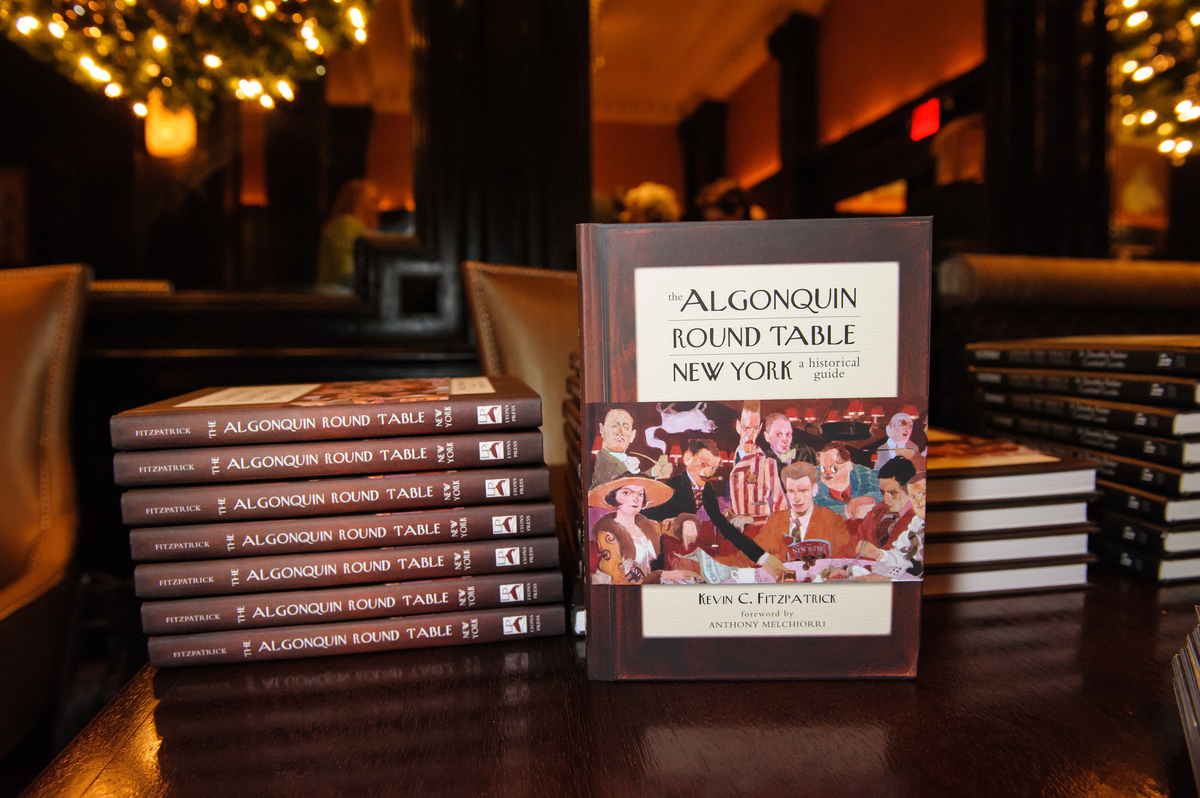
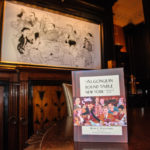
Adapted from The Algonquin Round Table New York, A Historical Guide (Globe Pequot Press) available here.

The Vermont Alexander Woollcott PaintingThe Vermont Alexander Woollcott Painting

Woollcott

The Vermont Painting.

Now that my book is out, I am looking at what went right and what went wrong with The Algonquin Round Table New York: A Historical Guide. Today I was in a file of letters, and I came across one that I never got a response to.

In 2010, I wrote to the director of the Castleton Free Library, in Castleton, Vermont. This is not far from where Alexander Woollcott and his friends had a vacation house on an island in nearby Lake Bomoseen. From what I learned, Woollcott, the egomaniac that he was, gifted to the little library a large oil painting of himself. It is the work of John Decker, a close Hollywood friend of John Barrymore and W. C. Fields. It’s based on a photo of Woollcott wearing his favorite vest, embroidered by Mrs. Theodore Roosevelt II.

At the time of the letter I was working like crazy to collect as many photos, rare and unseen, as possible. I loved this lost little piece of art, and wanted a photo of it for the book. At the most, someone just needed to get on a ladder and snap a photo for me. (The one in this blog post is from this site).

Here is my letter from Nov. 3, 2010:

I’m an author currently completing a book about New York City authors in the 1920s and one of my subjects is Alexander Woollcott. I was delighted to learn that there is a fantastic painting of Mr. Woollcott hanging in the Castleton Free Library.

I’m writing to humbly request if you could ask someone to send me a photo of the painting as it hangs in the library. Because of Mr. Woollcott’s lifelong association with literature, I’d like to include a photo of your library and the painting in my book.

If you would be so kind as to let me know if you can assist me, I’d appreciate it very much. I have until the end of the year to track down photographs, and having this addition would be a real asset to the book.

Sincerely,

Kevin C. Fitzpatrick

And… I never got a reply. One day I hope to go to Vermont and visit the lake house and I’m going to the library to see the painting.

117 Years Ago Today 1st Guests Arrived at the Algonquin Hotel117 Years Ago Today 1st Guests Arrived at the Algonquin Hotel

Today is the anniversary of the opening of the Algonquin Hotel in 1902. Guests 117 years ago checked into the newest hotel on the block, located at No. 59-63 West Forty-fourth Street. When the Vicious Circle launched a century ago in 1919, it was but just 17 years old.

For the 2015 book The Algonquin Round Table New York: A Historical Guide (Globe Pequot), an entire chapter is devoted to the history of the hotel, its ownership era, and legends. A brief excerpt about the early days in 1902 begins:

“It isn’t the oldest hotel on the block. Both the Royalton at No. 44 and the Iroquois at No. 49 opened in 1900. In 1901-1902 the Thompson-Starrett Company built the Algonquin Hotel for the Puritan Realty Company. Puritan bought the plot, 72 x 100 feet, for $180,000 in November 1901. Construction of the one-hundred thirty-six foot tall building took just seven months. Puritan Realty put up the money, $500,000, and Thompson-Starrett acted as the architects and contractors. Twenty-eight year-old architect Goldwin Starrett worked on the hotel with his brothers Theodore, Ralph, and William.

It opened as the Hotel Algonquin, named for the Native Americans who were populous in New England during the pre-colonial era. “Algonquin” was chosen at the suggestion of first owner Ann Stetson Foster, because the Hotel Iroquois was already next-door. “It will make a veritable Indian settlement,” she said.

The first guests checked in on November 22, 1902. The twelve-story hotel had 192 rooms and suites. A room and bath en suite cost $2 a day, while a three-bedroom suite with private hall, sitting room, dining room, three bathrooms, and library would set you back $10. Following extensive renovations in 2012, the hotel now has 181 rooms; of those 25 are suites.”

The hotel is local and national literary landmark. We lift a glass to its continued history, success, and achievements. Here is a great podcast recorded inside the hotel by Greg and Tom, The Bowery Boys.