Algonquin Round Table History,News Heywood Broun on Babe Ruth in 1922

Heywood Broun on Babe Ruth in 1922

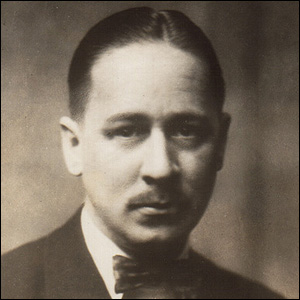
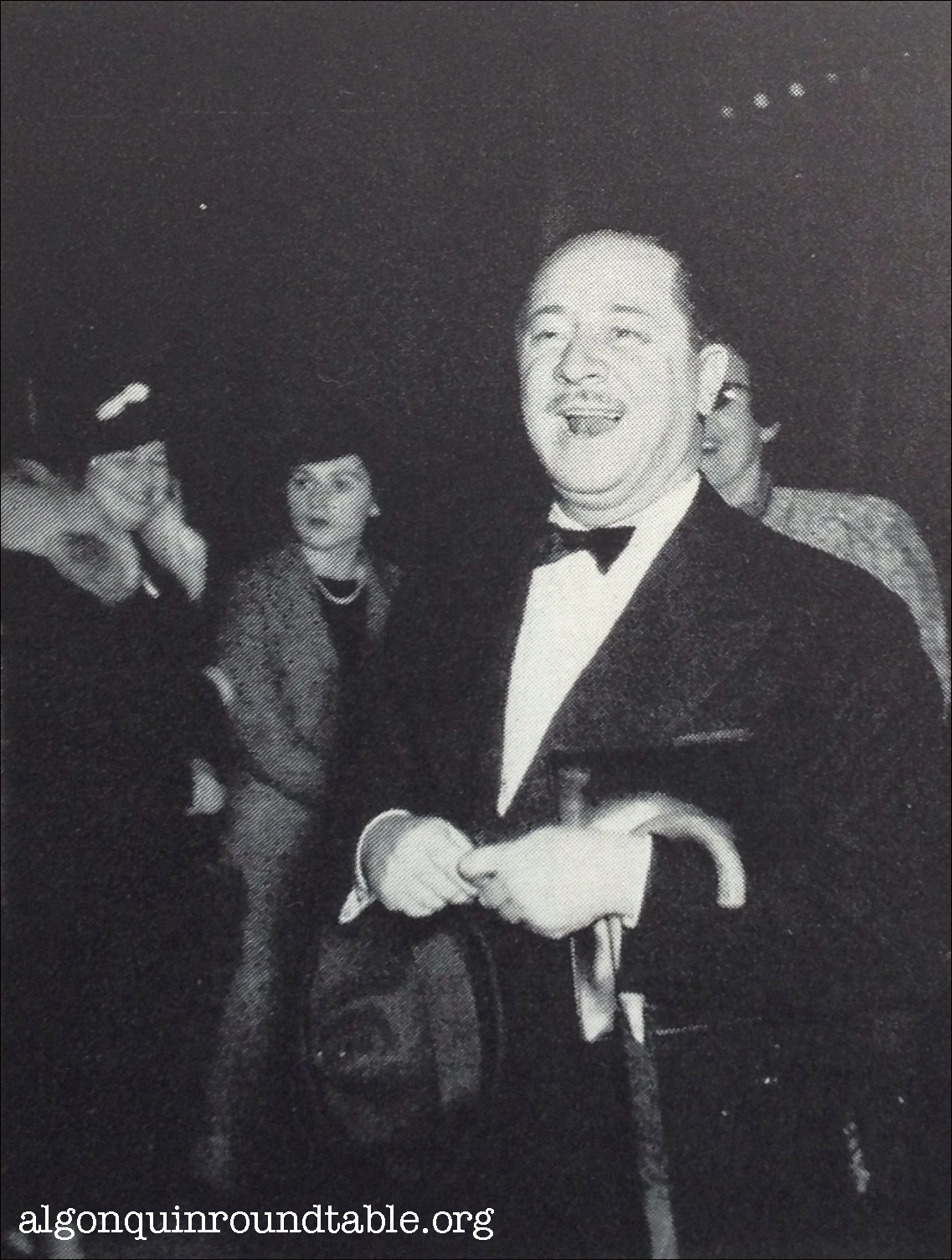
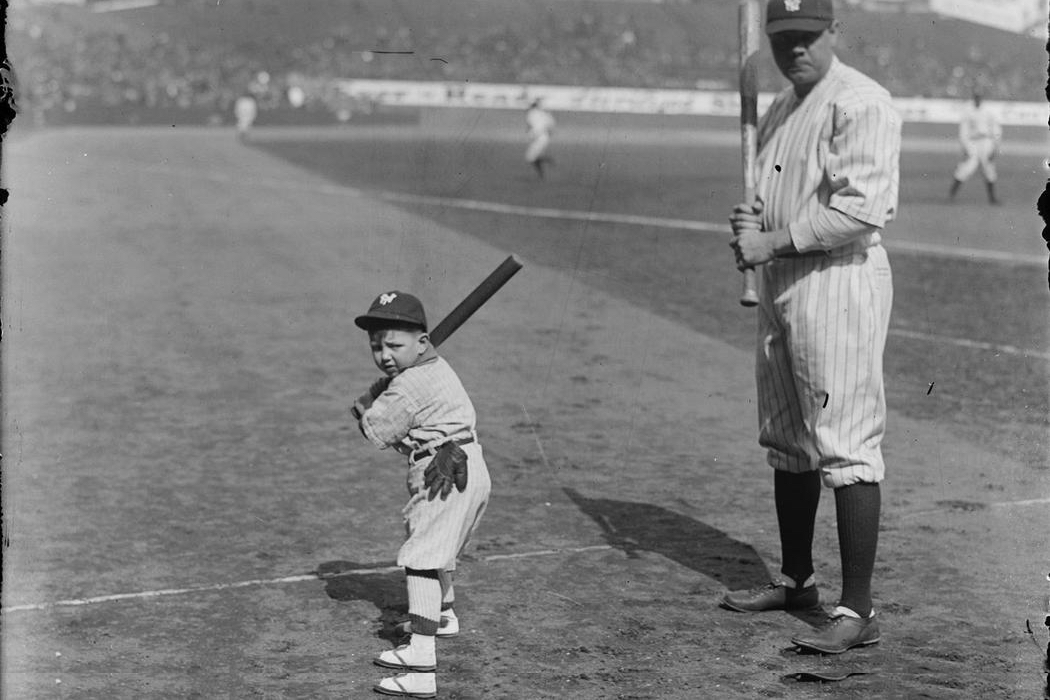
With baseball season around the corner, let’s look at one of the many Algonquin Round Table links to the game. In the world of New York newspaper columnists in the Jazz Age, Heywood Broun stood out from the rest. His column “It Seems To Me” was beloved, and he could tackle any subject. Broun had gotten his start as a baseball writer, and continued his passion for ballpark trips even when he became a celebrity covering Broadway and news stories. Broun had seats in the press box to watch Babe Ruth in his amazing 1921 season with the New York Yankees. This column appeared in 1922.

Ruth Vs. Roth
By Heywood Broun

We picked up “Who’s Who in America” yesterday to get some vital statistics about Babe Ruth, and found to our surprise that he was not in the book. Even as George Herman Ruth there is no mention of him. The nearest name we could find was: “Roth, Filibert, forestry expert; b. Württemberg, Germany, April 20, 1858; s. Paul Raphael and Amalie (Volz) R., early edn. in Württemberg—”

There is in our heart not an atom of malice against Prof. Roth (since September, 1903, he has been “prof. forestry, U. Mich.”), and yet we question the justice of his admission to a list of national celebrities while Ruth stands without. We know, of course, that Prof. Roth is the author of “Forest Conditions in Wisconsin” and of “The Uses of Wood,” but we wonder whether he has been able to describe in words uses of wood more sensational and vital than those which Ruth has shown in deeds. Hereby we challenge the editor of “Who’s Who in America” to debate the affirmative side of the question: Resolved, That Prof. Roth’s volume called “Timber Physics” has exerted a more profound influence in the life of America than Babe Ruth’s 1921 home-run record.
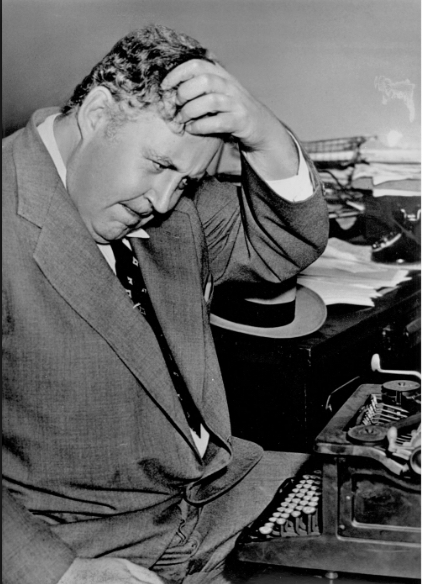
Heywood Broun

Heywood Broun

The question is, of course, merely a continuation of the ancient controversy as to the relative importance of the theorist and the practitioner: should history prefer in honor the man who first developed the hypothesis that the world was round or the other who went out and circumnavigated it? What do we owe to Ben Franklin and what to the lightning? Shall we celebrate Newton or the apple?

Personally, our sympathies go out to the performer rather than the fellow in the study or the laboratory. Many scientists staked their reputations on the fact that the world was round before Magellan set sail on the Vittoria. He did not lack written assurances that there was no truth in the old tale of a flat earth with dragons and monsters lurking just beyond the edges.

But suppose, in spite of all this, Magellan had gone on sailing, sailing until his ship did topple over into the void of dragons and big snakes. The professors would have been abashed. Undoubtedly they would try to laugh the misfortune off, and they might even have been good enough sports to say, “That’s a fine joke on us.” But at worst they could lose nothing but their reputations, which can be made over again. Magellan would not live to profit by his experience. Being one of those foreigners, he had no sense of humor, and if the dragons bit him as he fell, it is ten to one he could not even manage a smile.

By this time we have rather traveled away from Roth’s “Timber Physics” and Ruth’s home-run record, but we hope that you get what we mean. Without knowing the exact nature of “Timber Physics,” we assume that the professor discusses the most efficient manner in which to bring about the greatest possible impact between any wooden substance and a given object. But mind you, he merely discusses it. If the professor chances to be wrong, even if he is wrong three times, nobody in the classroom is likely to shout, “You’re out!”

The professor remains at bat during good behavior. He is not subject to any such vicissitudes as Ruth. Moreover, timber physics is to Mr. Roth a matter of cool and calm deliberation. No adversary seeks to fool him with speed or spitballs. “Hit it out” never rings in his ears. And after all, just what difference does it make if Mr. Roth errs in his timber physics? It merely means that a certain number of students leave Michigan knowing a little less than they should—and nobody expects anything else from students.

On the other hand, a miscalculation by Ruth in the uses of wood affects much more important matters. A strike-out on his part may bring about complete tragedy and the direst misfortune. There have been occasions, and we fear that there will still be occasions, when Ruth’s bat will be the only thing which stands between us and the loss of the American League pennant. In times like these who cares about “Forest Conditions in Wisconsin”?

Coming to the final summing up for our side of the question at debate, we shall try to lift the whole affair above any mere Ruth versus Roth issue. It will be our endeavor to show that not only has Babe Ruth been a profound interest and influence in America, but that on the whole he has been a power for progress. Ruth has helped to make life a little more gallant. He has set before us an example of a man who tries each minute for all or nothing. When he is not knocking home runs he is generally striking out, and isn’t there more glory in fanning in an effort to put the ball over the fence than in prolonging a little life by playing safe?

***

Adapted from The Lost Algonquin Round Table: Humor, Fiction, Journalism, Criticism and Poetry From America’s Most Famous Literary Circle (Donald Books/iUniverse). Edited by Nat Benchley and Kevin C. Fitzpatrick. Available Here.
Related Post

Heywood Broun

Heywood Broun on Being Fired in the Spring, Summer, and Winter (Summer is Best)Heywood Broun on Being Fired in the Spring, Summer, and Winter (Summer is Best)

Heywood Broun

Heywood Broun

This is one of the very last columns that Heywood Broun ever published. Broun ran his own bi-weekly newspaper, Nutmeg (later called Broun’s Nutmeg) in Stamford, Connecticut, where he resided. It was in operation in the late 1930s, and was concurrent as he wrote a syndicated column “It Seems to Me” for Scripps-Howard and organized the Newspaper Guild. After his contract was allowed to lapse in late 1939, he moved to the New York Post. He only had one column appear in the paper, as he succumbed to pneumonia on December 18 at age 51. This column was written ten days before his death.

Old Newspaperman
By Heywood Broun
December 9, 1939

It happens suddenly. On a Tuesday, perhaps, you’re sitting around kidding back and forth in the City Room and maybe growing reminiscent about some story you covered quite a long time back. Yes, that’s the way it was. It gave an opening to a young squirt reporter and he said, “Uncle Heywood, how did you like Jenny Lind’s first concert?”

Now naturally I never saw Jenny Lind but I did ride in horse-driven buses on Fifth Avenue and I saw Admiral Dewey come parading across Washington Square and we all hollered because he had won the Battle of Manila and made America a world power.

Everybody got to calling me Uncle Heywood and at the drop of a hat I could be induced to talk about Matty and the old, old Giants. And when the mood gripped me I would even go back to the days of Dan McGann. You can always spot an old newspaperman by his tendency to talk and write of things in the past. Every one of us will insist that they don’t grow fighters like Fitzsimmons any more.

There isn’t any set time for becoming an old newspaperman but around fifty is the dangerous age and at fifty-one the line is definitely marked as the groove on the floor of the Alamo.

I’ve been fired in the Spring, the Summer and early Winter. I like it best in the Summer. Three times in thirty-one years isn’t so much to be fired. The first firing is often worse than the last. It’s very discouraging to get canned when you’re young. That’s the way it was with me. I was twenty-one and working on the Morning Telegraph. My stall in the old Eighth Avenue car barn was right next to Bide Dudley. He was getting $35 a week and my salary was $28. I wanted $30 but when I asked for it they fired me.

The next job was a long time coming. Fortunately I was a man of character and living at home and so I didn’t go into insurance or business but just borrowed money from my father and sat around for six months doing nothing. Eventually Burdick gave me a job on the Tribune.

He was a shy city editor and when he mentioned the salary he didn’t want to pronounce the fatal words. He gazed away off at a distant window and wrote on a piece of scratch paper $25. Newspaper work is like that. You can go perfectly straight down once you are over the top of the mountain but detours are necessary as you come up from the valley.

As a matter fact it was a mountain which made me. Burdick gave me the Tribune job on the strength of a recommendation from Fred Pitney, his star reporter. Pitney remembered that when I covered the E. H. Harriman death watch for the Evening Sun, I had crawled up through the woods at Arden and come right to the door of the big house. Getting there didn’t get me anything but a boot from the butler. Still after a year and a half Pitney remembered me as an energetic young man. I’ve seen that hill since and now I couldn’t walk it let alone make the grade on my belly.

Pretty nearly ten years went by before I got fired again. The World did it. I had gone onto the paper on my own volition and through the seductive influence of Mr. Swope.

The Sacco-Vanzetti case has something to do with it but only indirectly. First of all I went on a one-man strike because they said I wasn’t to write about the case anymore. They didn’t disagree with my opinions but they objected to violence of language. “Is Harvard to be known hereafter as Hangman’s House?” Was the sentence which made the trouble.

At the end of six or seven months the good shoemaker and the poor fish peddler were dead and things were patched up for me to go back to the paper. Getting fired was something of a surprise. Being bereft of topics I dashed off a little masterpiece for The Nation saying that I thought the editorial policy of The Morning World was a shade on the timid side. I believe I said, “The World on numerous occasions has been able to take two, three, or even four different stands with precisely the same material in hand. So constant were the shifts during the Sacco-Vanzetti case that the paper seemed like an old car going up a hill.”

Naturally I didn’t expect the editors to like it but after all The Nation isn’t so big and umbrage wasn’t in the scope of my vision. Blithely on the way home I bought a morning paper but I only looked at the sport page. Arriving home I was asked as I came in the door whether or not I had read The World. “Sure,” I replied, “Yankees win, Giants win, Dodgers lose.” Those were the old, old Giants.

“But have you seen your own page?” my wife persisted.

“I’m saving that up for later,” I told her.

“You needn’t,” she said, “you’re fired.”

And so I was. There in my old spot was a box explaining that Mr. Broun had been dropped on account of disloyalty. I did object to the word a little because the casual reader would hardly know whether I had robbed the till or sat on the editor’s hat.

Still it was Summer and I was full of energy and I went around opening my shirt to show my scars and having a fine time in general. And presently I got a job with Scripps-Howard which lasted eleven years. This ran out in the Winter.

Since Nutmeg is a publication which belongs to what the Parisians wittily call “Le Presse Confidentiale,” or French to that effect, I think I may reveal that the farewell conference with Roy W. Howard passed off in entire peace and amity.

He said, “I’ve talked it over with my associates and we’ve decided not to make you an offer. It would be just too much grief. The price of newsprint is going up and we think the place to cut expenses is among the high price specialists in order to protect the run of the mine reporter.”

“Roy,” I said (all Scripps Howard executives are known by the first name even to the humblest employee), “I can’t possibly make any squawk about that because I’ve made that same speech myself at dozens of Guild meetings.”

And so we shook hands and had a drink and everything was very pleasant. But I still think it is better to be fired in the Summer.

For more about Heywood Broun and his newspaper career, be sure to get a copy of The Algonquin Round Table New York, A Historical Guide (Globe Pequot Press).

Al Hirschfeld Illustration

The Round Table Centennial SummerThe Round Table Centennial Summer

The Algonquin Hotel is not going to let the centennial of the first luncheon of the Algonquin Round Table pass without notice. The national literary landmark has planned an entire summer of events to celebrate the Vicious Circle, which began as a welcome home roast for critic Alexander Woollcott in June 1919.

To mark the occasion, the hotel is having a special $19.99 lunch menu every day until Labor Day, live music on Thursdays and Saturday nights, and a poet in residence in the lobby on Fridays. You can also attend, and participate in open mic poetry readings. The full hotel schedule is here. There will be weekly history walking tours at 3:00 p.m. on Wednesdays, meeting in the lobby, the schedule and advance ticket link is here.

The hotel is hosting five evening curated dinners on Wednesday nights at 6:00 p.m. in June and July. Each week a different New York expert will be featured that is in keeping in the spirit of the Algonquin Round Table and its members. Book your spot in advance on Open Table for cocktails and dinner, noting the night you wish to attend.

Wednesday Night Schedule for the Round Table Room Restaurant
6:00 p.m. cocktails at the Round Table
6:30 p.m. seat for dinner
7:30-8:00 p.m. dessert and Round Table talk.
Guests must have dinner reservations. Reserve your seat in the Round Table Room here (note the date & time at 6:00).

These experts are in the spirit of the Vicious Circle and will be talking about topics in the vein of the legendary members of New York’s most famous group of friends. Come for cocktails and dinner and enjoy a look at the worlds of current New York City through writing, music, comedy, and the most-beloved pastime of the group: high-stakes poker.

Laurie Gwen Shapiro

June 12
Laurie Gwen Shapiro – Writing

Laurie Gwen Shapiro is a native of New York City’s Lower East Side. She has most recently written articles for publications including The New Yorker, New York Magazine, The Daily Beast, Lapham’s Quarterly, Slate, Aeon, Los Angeles Review of Books, and has her own history column focusing on unsung heroes for The Forward. Laurie is also a documentary filmmaker who won an Independent Spirit Award for directing IFC’s Keep the River On Your Right: A Modern Cannibal Tale and an Emmy nomination for producing HBO’s Finishing Heaven. The Stowaway is her first non-fiction book. It’s the spectacular, true story of a scrappy teenager from the Lower East Side who stowed away on the Roaring Twenties’ most remarkable feat of science and daring: an expedition to Antarctica.

Book your spot in advance here.

Michael Cumella

June 19
Michael Cumella – Music

Creator of the “Gramophone DJ” concept, Phonograph DJ Michael Cumella brings two 1905 disc phonographs and plays 78’s circa 1900-1929 for an engaging musical experience. The music ranges from ragtime to dance bands, instrumentalists to songsters. Visually fascinating and very entertaining, the presentation creates a wonderful atmospheric ambiance. As host of WFMU Radio’s Antique Phonograph Music Program since 1995, he is a leading expert on this period of culture and music. Michael will bring to the hotel a vintage phonograph and play original music from 1919.

Book your spot in advance here.

Noah Diamond

June 26
Noah Diamond – comedy

The #1 source for comedy knowledge of the Algonquin Round Table era is Noah Diamond, a writer, performer, producer, and raconteur. He’s the award-winning creator of the off-Broadway Marx Brothers revival I’ll Say She Is and has written and lectured extensively about the Brothers and their work, including a multimedia comedy lecture. This fall his brand-new show 400 Years in Manhattan will debut at the United Solo Theatre Festival in Manhattan on Theatre Row.

Book your spot in advance here.

Kevin Fitzpatrick

July 10
Kevin C. Fitzpatrick – history

The author of 8 non-fiction books tied to NYC history, including The Algonquin Round Table New York: A Historical Guide and Under the Table: The Dorothy Parker Cocktail GuideKevin C. Fitzpatrick started the Dorothy Parker Society 20 years ago. He has been leading walking tours of the Vicious Circle haunts and hangouts since 1999. His talk will be about the women of the Round Table. So many know of Parker and Edna Ferber, but not many can recall Jane Grant, Margalo Gillmore, Ruth Hale, Neysa McMein, Beatrice Kaufman, or Peggy Wood.

Book your spot in advance here.

joanna holliday

July 17
Joanna Holliday – poker

The World Series of Poker is the biggest gambling event of the year in the United States. Joanna Holliday is a professional poker player and has competed numerous times in big stakes tournaments across the country. She’s also a wit, fast-talker, and podcaster. For 25 years she’s been slinging drinks at Doc Holliday’s in the East Village. Since the majority of the Round Table were addicted to cards, she’s going to be talking about how to play poker and win, as well as what it takes to maintain your balance and wellness in such a stressful competition.

Book your spot in advance here.

The Algonquin is also offering special room packages, so why not spent a few nights in the most famous hotel in the city? Click here for more information. The events go all summer, and there will be more events in the fall as well. If you have any questions, contact us.
Frank Sullivan Place

Frank Sullivan of Saratoga SpringsFrank Sullivan of Saratoga Springs

Frank Sullivan Home, Saratoga Springs

Frank Sullivan Home, Saratoga Springs


After the demise of the New York World in 1931, Algonquin Round Table member Frank Sullivan moved home to Saratoga Springs and became the ultimate freelancer. In a small clapboard house shared with his sister at 135 Lincoln Avenue, he turned out marvelous humor pieces for the rest of his career. “Once I visited New York for twenty years but I wouldn’t live there if you gave me Philadelphia,” he wrote. “A small town is the place to live. I live in a small town 180 miles from New York and while I would not say it has New York beat by a mile I would put the distance at six furlongs.”

Over the years, New Yorkers such as Harold Ross and Marc Connelly visited Sullivan, who took them to the racetrack, two blocks from his house, which treated him like royalty. He picked up the nickname “The Sage of Saratoga” and worked until his early eighties. He wrote for The New Yorker for fifty years as well as the Times sports section, the Saturday Evening Post, and Town & Country, his work collected in half a dozen books.

Sullivan suffered a series of falls in his home, and his health deteriorated. He died in Saratoga Hospital on February 19, 1976, at age 83. He is buried in the family plot St. Peter’s Cemetery in Saratoga Springs.

Frank Sullivan Place

Frank Sullivan Place

Today he is immortalized with a street sign nearby the racetrack, Frank Sullivan Place. His house was named a literary landmark, and is privately owned.

Adapted from The Algonquin Round Table New York, A Historical Guide (Globe Pequot Press) available here.