Algonquin Round Table History,News The Round Table Centennial Summer

The Round Table Centennial Summer

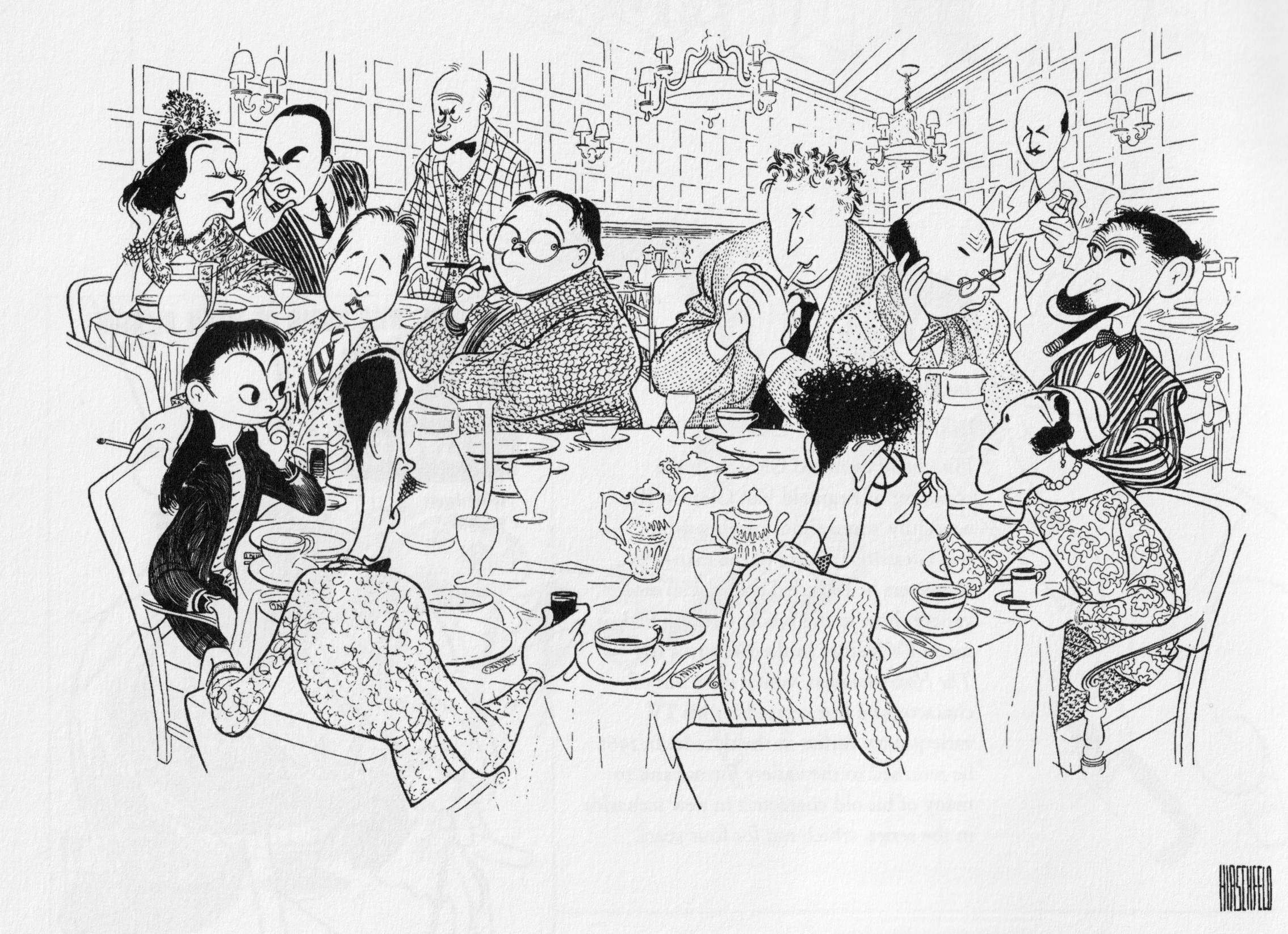
Al Hirschfeld Illustration
The Algonquin Hotel is not going to let the centennial of the first luncheon of the Algonquin Round Table pass without notice. The national literary landmark has planned an entire summer of events to celebrate the Vicious Circle, which began as a welcome home roast for critic Alexander Woollcott in June 1919.

To mark the occasion, the hotel is having a special $19.99 lunch menu every day until Labor Day, live music on Thursdays and Saturday nights, and a poet in residence in the lobby on Fridays. You can also attend, and participate in open mic poetry readings. The full hotel schedule is here. There will be weekly history walking tours at 3:00 p.m. on Wednesdays, meeting in the lobby, the schedule and advance ticket link is here.

The hotel is hosting five evening curated dinners on Wednesday nights at 6:00 p.m. in June and July. Each week a different New York expert will be featured that is in keeping in the spirit of the Algonquin Round Table and its members. Book your spot in advance on Open Table for cocktails and dinner, noting the night you wish to attend.

Wednesday Night Schedule for the Round Table Room Restaurant
6:00 p.m. cocktails at the Round Table
6:30 p.m. seat for dinner
7:30-8:00 p.m. dessert and Round Table talk.
Guests must have dinner reservations. Reserve your seat in the Round Table Room here (note the date & time at 6:00).

These experts are in the spirit of the Vicious Circle and will be talking about topics in the vein of the legendary members of New York’s most famous group of friends. Come for cocktails and dinner and enjoy a look at the worlds of current New York City through writing, music, comedy, and the most-beloved pastime of the group: high-stakes poker.
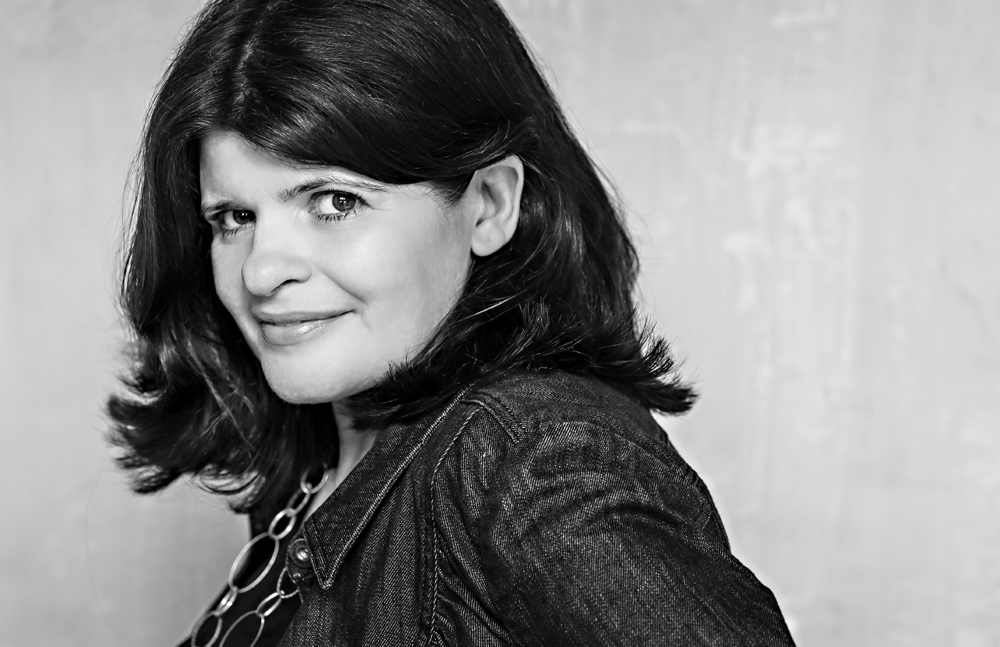
Laurie Gwen Shapiro

June 12
Laurie Gwen Shapiro – Writing

Laurie Gwen Shapiro is a native of New York City’s Lower East Side. She has most recently written articles for publications including The New Yorker, New York Magazine, The Daily Beast, Lapham’s Quarterly, Slate, Aeon, Los Angeles Review of Books, and has her own history column focusing on unsung heroes for The Forward. Laurie is also a documentary filmmaker who won an Independent Spirit Award for directing IFC’s Keep the River On Your Right: A Modern Cannibal Tale and an Emmy nomination for producing HBO’s Finishing Heaven. The Stowaway is her first non-fiction book. It’s the spectacular, true story of a scrappy teenager from the Lower East Side who stowed away on the Roaring Twenties’ most remarkable feat of science and daring: an expedition to Antarctica.

Book your spot in advance here.
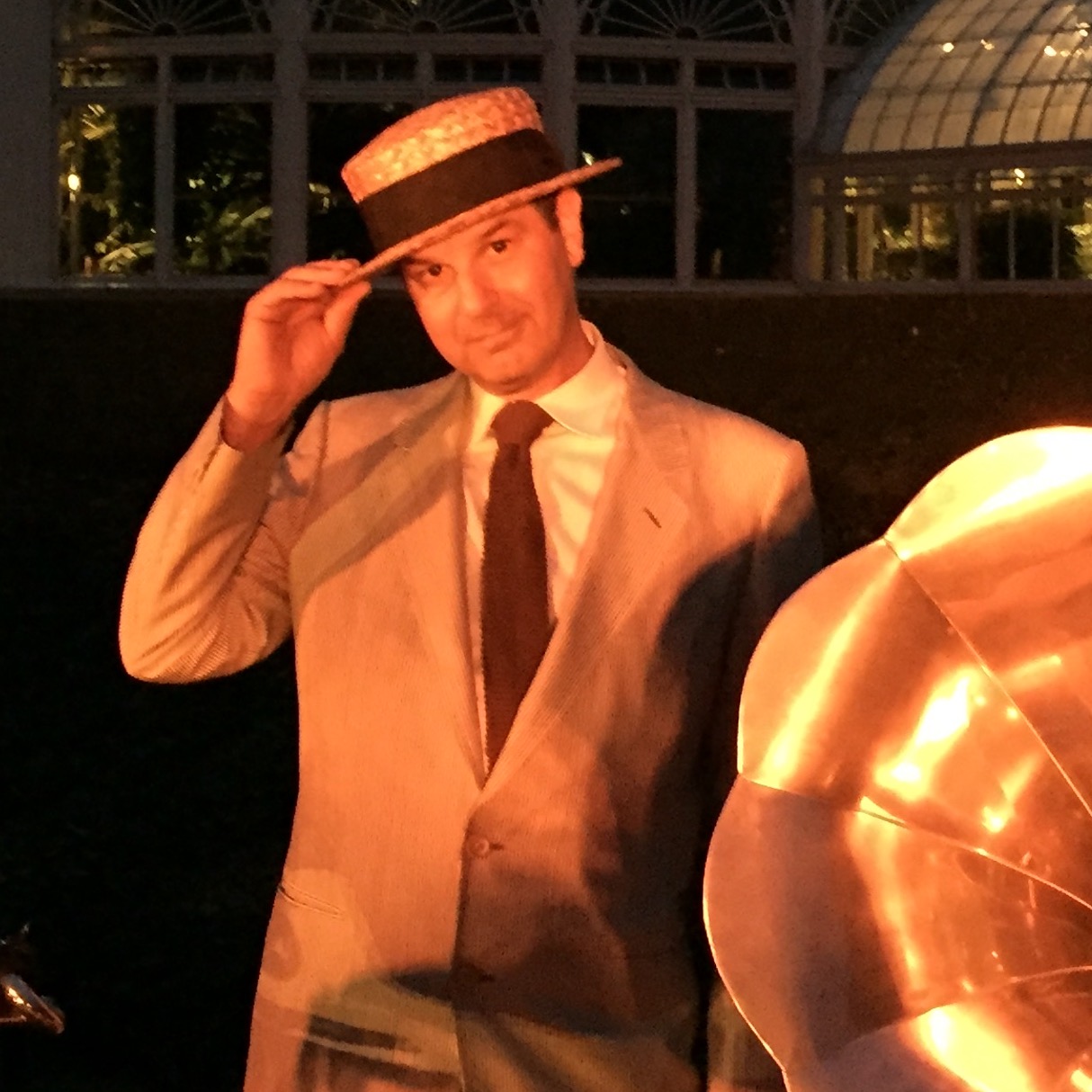
Michael Cumella

June 19
Michael Cumella – Music

Creator of the “Gramophone DJ” concept, Phonograph DJ Michael Cumella brings two 1905 disc phonographs and plays 78’s circa 1900-1929 for an engaging musical experience. The music ranges from ragtime to dance bands, instrumentalists to songsters. Visually fascinating and very entertaining, the presentation creates a wonderful atmospheric ambiance. As host of WFMU Radio’s Antique Phonograph Music Program since 1995, he is a leading expert on this period of culture and music. Michael will bring to the hotel a vintage phonograph and play original music from 1919.

Book your spot in advance here.

Noah Diamond

June 26
Noah Diamond – comedy

The #1 source for comedy knowledge of the Algonquin Round Table era is Noah Diamond, a writer, performer, producer, and raconteur. He’s the award-winning creator of the off-Broadway Marx Brothers revival I’ll Say She Is and has written and lectured extensively about the Brothers and their work, including a multimedia comedy lecture. This fall his brand-new show 400 Years in Manhattan will debut at the United Solo Theatre Festival in Manhattan on Theatre Row.

Book your spot in advance here.

Kevin Fitzpatrick

July 10
Kevin C. Fitzpatrick – history

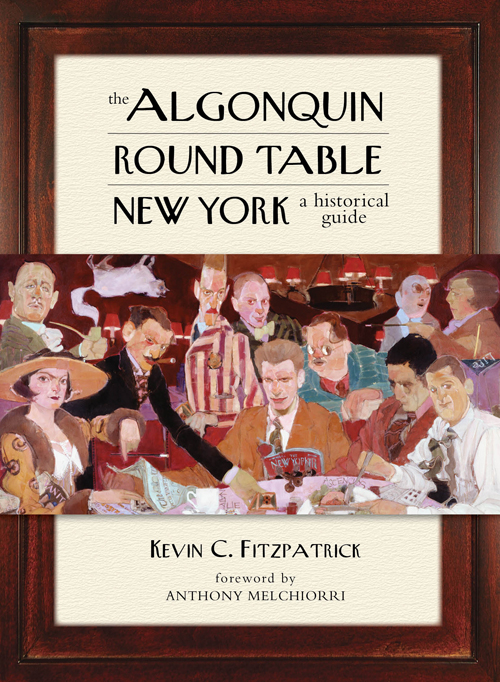
The author of 8 non-fiction books tied to NYC history, including The Algonquin Round Table New York: A Historical Guide and Under the Table: The Dorothy Parker Cocktail GuideKevin C. Fitzpatrick started the Dorothy Parker Society 20 years ago. He has been leading walking tours of the Vicious Circle haunts and hangouts since 1999. His talk will be about the women of the Round Table. So many know of Parker and Edna Ferber, but not many can recall Jane Grant, Margalo Gillmore, Ruth Hale, Neysa McMein, Beatrice Kaufman, or Peggy Wood.

Book your spot in advance here.
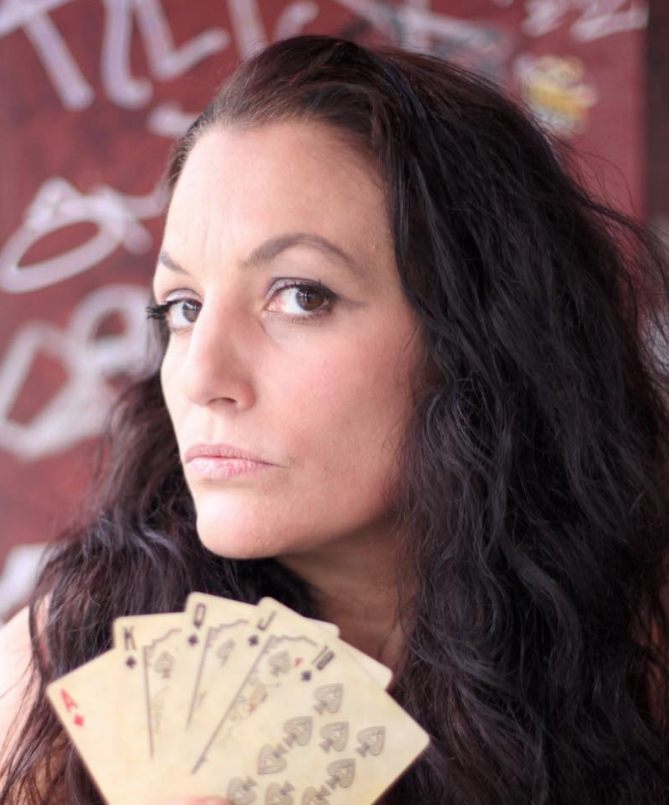
joanna holliday

July 17
Joanna Holliday – poker

The World Series of Poker is the biggest gambling event of the year in the United States. Joanna Holliday is a professional poker player and has competed numerous times in big stakes tournaments across the country. She’s also a wit, fast-talker, and podcaster. For 25 years she’s been slinging drinks at Doc Holliday’s in the East Village. Since the majority of the Round Table were addicted to cards, she’s going to be talking about how to play poker and win, as well as what it takes to maintain your balance and wellness in such a stressful competition.

Book your spot in advance here.

The Algonquin is also offering special room packages, so why not spent a few nights in the most famous hotel in the city? Click here for more information. The events go all summer, and there will be more events in the fall as well. If you have any questions, contact us.
Related Post

Marxfest

Marx Brothers Festival Returns in May 2024Marx Brothers Festival Returns in May 2024

It is exciting to announce that the Marx Brothers Festival is returning in May 2024 exactly ten years after the first successful Marxfest in New York. This week, the Marxfest committee announced the festival dates (May 17-19 and May 24-26), and revealed the names of just three of the many great events being planned:

ROBERT KLEIN REMEMBERS: The comedy legend on the Marx Brothers and their influence, in conversation with Jason Zinoman of The New York Times.

UNHEARD MARX BROTHERS: Audio Rarities with collector extraordinaire John Tefteller.

THE THRILL OF I’LL SAY SHE IS: The ultimate centennial experience.

MarxfestThere will be two weekends of Marx entertainment, May 17-19 in Manhattan and May 24-26 in Coney Island. The full calendar of events and ticket sales have not been announced yet. Currently a crowdfunding campaign is underway, and this supports the festival operations and expenses.

Noah Diamond of the committee wrote, “Donate to our crowdfunding campaign. Of course, this is another dreamy, fan-driven project with limitless reserves of nerve, moxie, pluck, vim, and vigor, but other resources are in shorter supply. We’re reliant on donations from fellow Marx Brothers fanatics to help defray expenses like space rentals, printing, equipment, and administration. You will not be surprised to hear that there are fabulous donor rewards described on our crowdfunding page — or that through our fiscal sponsor, Fractured Atlas, donations are tax-deductible to the fullest extent permitted by law!”

Noah sent us a fantastic tie of the Marx Brothers to the Algonquin Round Table. Harpo Marx was a member, and he was close friends with Dorothy Parker and Alexander Woollcott. Noah dug up the 1924 Robert Benchley review from Life, following the Broadway debut of the Marx Brothers:

We are happy to announce that the laughing apparatus of this department, long suspected of being out-of-date and useless, is in perfect running order, and can be heard any evening at the Casino Theatre during those magnificent moments when the Marx Brothers are participating in “I’ll Say She Is.” Not since sin laid it’s heavy hand on our spirit have we laughed so loud and so offensively. And as we picked ourself out of the aisle following each convulsion, there rang through our soul the joyful paean: “Grandpa can laugh again! Grandpa can laugh again!”

“I’ll Say She Is” is probably one of the worst revues ever staged, from the point of view of artistic merit and general deportment. And yet when the Marx Brothers appear, it becomes one of the best. Certainly we have never enjoyed one so thoroughly since the lamented Cohan Revues, and we will go before any court and swear that two of the four Marxes are two of the funniest men in the world.

We may be doing them a disservice by boiling over about them like this, but we can’t help it if we feel it, can we? Certainly the nifties of Mr. Julius Marx will bear the most captious examination, and even if one in ten is found to be phony, the other nine are worth the slight wince involved at the bad one. It is certainly worth hearing him, as Napoleon, refer ti the “Marseillaise” as the “mayonnaise,” if the next second, he will tell Josephine that she is as true as a three dollar cornet. The cornet line is one of the more rational of the assortment. Many of them are quite mad, and consequently much funnier to hear but impossible to retell.

There is no winching possible at the pantomime of Mr., Arthur Marx. It is 110 proof artistry. To watch him during the deluge of knives and forks from his coat-sleeve, or in the poker game (where he wets one thumb and picks the card off with the other), or—oh, well, at any moment during the show is to feel a glow at being alive in the same generation. We hate to be like this, for it is inevitable that we are prejudicing readers against the Marx boys by our enthusiasm, but there must be thousands of you who have seen them in vaudeville (where almost everything that is funny on our legitimate stage seems originate) and who know that we are right.

Do not miss this absolutely fun program of events around New York, all times to the centennial of “I’ll Say She Is.”

Kevin Wilkes and Peter Cruz.

Last Day for the Doormen of the Algonquin HotelLast Day for the Doormen of the Algonquin Hotel

Kevin Wilkes and Peter Cruz.

Visitors to the Algonquin Hotel will no longer see two of the legendary personalities greeting all visitors to the front door. On February 2, veteran doormen Peter Cruz and Kevin Wilkes retired on the same day together. At the Algonquin, Kevin had 32 years of service and Peter 46 years. The day before, the staff held a grand surprise retirement party for the pair in the Oak Room.

I caught up with them at their usual spot in the lobby, greeting guests, grabbing luggage, holding the doors open, and smiling and saying hello to all.

Peter started in the “back of the house” in the kitchen not long after his student days at LaGuardia High School for Music and Art. He was born on the Bowery to parents who had immigrated from Puerto Rico. Kevin is also a native New Yorker and an alum of Thomas Jefferson High in New Lots, Brooklyn.

The interview is edited and condensed for clarity.

Question: When did you guys start?

Kevin: 1992.

Question: What were you doing before you came here?

Kevin: Same thing, I actually worked over at the Drake Hotel.

Question: And how’d you get the job here?

Kevin: Where I worked it was slow over there and I went over to the union to try to get something, like a temporary (position), and they told me about this hotel. The personnel manager that worked at the Drake Hotel was at the Algonquin. They said, “I think you might know him. Go over.” Because it was only supposed to be a temp job because one of the guys had hurt his back or something. So, he was out for six months. It was like, “Well Kevin, this might just be a six-month thing.” And then once I came in, they were like, “Listen, he’s not coming back. You’re going to be here.” And I have been here ever since then. It was supposed to start as a temp job.

Question: What was this place like in the early nineties? What was the neighborhood like?

Kevin: I mean, it was the same. I mean the clubs. I think we were the only real hotel on the block other than the Iroquois. But our hotel stood out because of the history and everything, so that really made it nice.

Question: What about you? When did you start?

Peter: I started in 1978. I came here to work the back of the house, the stewarding position, and I was there for many years and within that I became store room person. I became the executive steward after a while and I always inquired about working at the front of the house. Finally, I was able to get a position there through the help of my coworkers. I’ve been here ever since.

Question: What year did you become a doorman? Is that the title?

Peter: Front service captain? Yeah, he was the bell captain, I was bell captain. And I’ve been here ever since and it’s been wonderful.

Question: When you started, how many bell staff were there?

Kevin: We had a full crew there. I believe it was…

Peter: Four or five.

Kevin: No, it was five. It was five.

Peter: Both staff…

Kevin: And three door members.

Peter: So, eight of us all together total in our section here.

Question: What do you like about the job?

Peter: For myself, the history, the people, the history back then. The cabaret. It was started when I started here. I saw Steve Ross stroll in one day and it’s been magical ever since.

Question: What keeps you here, Kevin?

Kevin: When I worked with the Drake, because it was a bigger hotel, they used to always tell me, “You don’t have time to talk to the guests. You got to keep it moving, you got to keep it moving.” And when I started here, it was like, “Wow, I get to socialize, I get to know the guests personally.” And that’s what I really liked about the hotel because you actually had a relationship with the guests and their experience in staying here. Also, they shared their history that they were telling me about at the hotel in those early years. So, it was really nice. I really enjoyed it.

Question: Who has been your favorite guest?

Kevin: It’s been so many. I think Maya Angelou took the words out of my mouth. To me, coming from the south, it was dealing with a respectful elder, like a great aunt or something like that. And she would just ask you how your family was. And I mean, I have her book that I’m taking home. I forgot I had it and she actually
autographed it. I took it home yesterday. It was like I was looking through the locker and cleaning it out. I was, wow, I forgot about this. I looked through it. Wow. She actually autographed it.

Question: That’s so cool.

Kevin: Really was. And also meeting the cabaret performers, they were all like family. They were the same performers. I remember, I think it was my second year and I got to meet Andrea Marcovicci as I was coming out the elevator. At that time, we were doing the New York Celebration here in the lobby and she called me over during her performance. The lobby was packed. And she says, “Come here.” She started serenading me. It was just like, “wow.” I couldn’t believe it.

Question: I believe it. She sang to my parents in the elevator.

Kevin: That’s Andrea for you. She’s so nice.

Peter: Harry Connick, Jr. He got his start here. Young guy. So nice, so friendly. From New Orleans… he played the Oak Room. Before he would go on, he would hang out with all of us staff in the kitchen. We loved him. He was so good with us, the kitchen, the dishwashers.

Question: Who’s somebody that you met that you didn’t think they were going to be so nice and was really great to you?

Kevin: There was one gentleman, his name was Mr. Kaufman. He actually owned, I think it was an Army and Navy store or something. I never forgot him. One time he called down and he said that he needed assistance with the luggage. So, in knowing him, I knew what he had. I kind of just went up by myself. It was a suitcase and a garment bag. And at that time our luggage carts were like shopping carts without the basket. And when I went up to get him, he actually screamed at me. He says, “Where’s the cart?” I said, “What cart? I can carry it down.” He says, “No, I want a cart.” So, I head back down, get the cart, and go up to him. But I thought it was hilarious. The two pieces of luggage.

Question: What’s it like here in the summer? What’s the difference between summer and winter working here?

Peter: Well, supposedly it’s supposed to be slow here in the summer, but for the past few years that has never been the case. It’s pretty good. There’s always a busy time in the city. People come to stay and for a lot of them it’s their first time. We end up getting a lot of repeat guests out of that because of the way we carry ourselves, the way the front desk carries themselves. And even after Cabaret was gone, they loved the atmosphere. Sure, sure. Yeah, definitely. And the location. That was something.

Kevin: That’s like a lot of groups. We had the Baker Street Irregulars year after year after year. I mean, how many years you think we had?

Peter: More than a decade.

Kevin: But it was nice working with groups like that and also seeing elder groups coming in that would tell you that how many years they came, like Mrs. White with her group, she would bring busloads in.

Peter: And what’s the name of the guy who comes all the time? The theater groups.

Kevin: Oh, George Harter.

Peter: George Harter. He used to come here and he still does. He still does. And he brings people here. He knows they are going to be taken care of. Proximity to Broadway. It’s one of our famous connections.

Kevin: I actually have got to send him a message though. Yeah. Just to let ’em know.

Peter: Yeah, absolutely.

Question: What’s the number one question people ask you every day?

Peter: They want to ask about the Round Table. What was that? Who was in there? What stories do you know about what went on with them? How eccentric was some of them, and so forth.

Question: How has it been working with the cat?

Peter: It’s been okay.

Kevin: It’s been okay. I mean, we work with more cats around. This is my fourth cat and this one is the friendliest out of all of ’em. The first cat, mixed reviews about it. Because that cat just always wandered outside. That cat would wander up to Sixth Avenue and sit on the corner and come back. Wow.

Peter: The first Matilda, right? Yeah. Yeah. She was a diva. Oh yeah. Oh yeah. I was here when we had Hamlet before that Matilda, I’ve been through five cats and that cat, there was actually a book written about him and with drawings by Hilary Knight. I have that book at home. It wasn’t autographed or anything, but it’s been written and I’m glad I have it.

Question: What’s something that kept you coming into work?

Peter: Something? My comrades. The camaraderie that we have here made for a good day every day. The front desk manager, it didn’t matter, the wait staff, but mostly our core group made for great days. It was always a pleasure to come to work, even if people called out, whatever. We found ways to make it work to the satisfaction of the management staff so they knew they could rely on upon us. And you don’t see that. I don’t think you could see that going forward as much as the times we had. Those were really good, great times. What more can I say about that? But it’s been incredible.

Question: What’s a tip you would give to someone reading this about New York City that nobody else knows?

Peter: Well. I say read your book. Read your book. Because that was a mountain of information. There are things in there that I never knew, and you’re quite the researcher and I’m glad I met you.

Question: Oh, thank you.

Peter: It’s been incredible, an incredible relationship. And even though I’m away, I look forward to always looking on the hotel and hopefully if you are around, stay in touch.

Question: What are you going to do in your retirement?

Peter: Well, my plan is to move to Puerto Rico. I have a home over there that was my parent’s. Now I inherited it and I’m going to make a life out of here. They say if you can make it here in New York, you can make it anywhere.

Question: So, from 44th Street to…

Peter: …Isabela, Puerto Rico.

Question: What’s a tip that you always give to people that are asking you about something?

Peter: Send them to the Blue Bar, which is really nice. We always try to promote the restaurant and the bar.

Question: I want to ask you, what’s the hotel like today from when you started your first day?

Peter: I would have to say, well, when I started here, all of these rooms down here were always full. The lobby, what was known as the Rose Room, the Chinese Room, and the Oak Room were always full. I know, because I was the dishwasher and we got all three outlets just dump everything on us every day.

It never stopped from the moment you started to closing time, normally at 12 Midnight, set up a buffet. It was just amazing and busy. This is when Ben and Mary Bodne had the place and they kept it up until they sold it. Then I think slowly, they started cutting back and they took the Blue Bar that was here and they put it over there, which was a good idea. But now the new owners, they have the Blue Bar here now, which is nice, but it’s different. It’s just way different. Their hours of operation are different. They’ve cut back everywhere. I guess it was needed. It’s just a different role now. But that’s fine. So that said, I think it’s a good time for me to fold it in and just say goodbye and wish everyone well and that includes you.

Question: Thank you so much, Peter and Kevin. We will all miss you.

Peter: Thank you.

Kevin: Thank you.

Read more about the history of the Algonquin Hotel in the only book about it, The Algonquin Round Table New York: A Historical Guide (Lyons Press).

The Algonquin Hotel

Vicious Circle Virtual Tours Begin April 3Vicious Circle Virtual Tours Begin April 3

Algonquin Round Table by Natalie Ascencious

Algonquin Round Table by Natalie Ascencious

I’ve turned the Algonquin Round Table walking tour into a virtual tour. I supply the tour, you can watch with friends and family, and try out your best wisecracks on each other. Plus we can cover a lot more ground together. I’m offering them on Fridays for four weeks, at 2:00 p.m. ET (New York time), which is 11:00 a.m. (Los Angeles), 6:00 p.m. (London), 7:00 p.m. (Paris) but check your time zone for seasonal changes. The tour is 2:00 p.m. in New York City time. Tickets are $10 each and can be purchased in advance here.

The tour will be Friday, April 3, 10, 17 and 24.

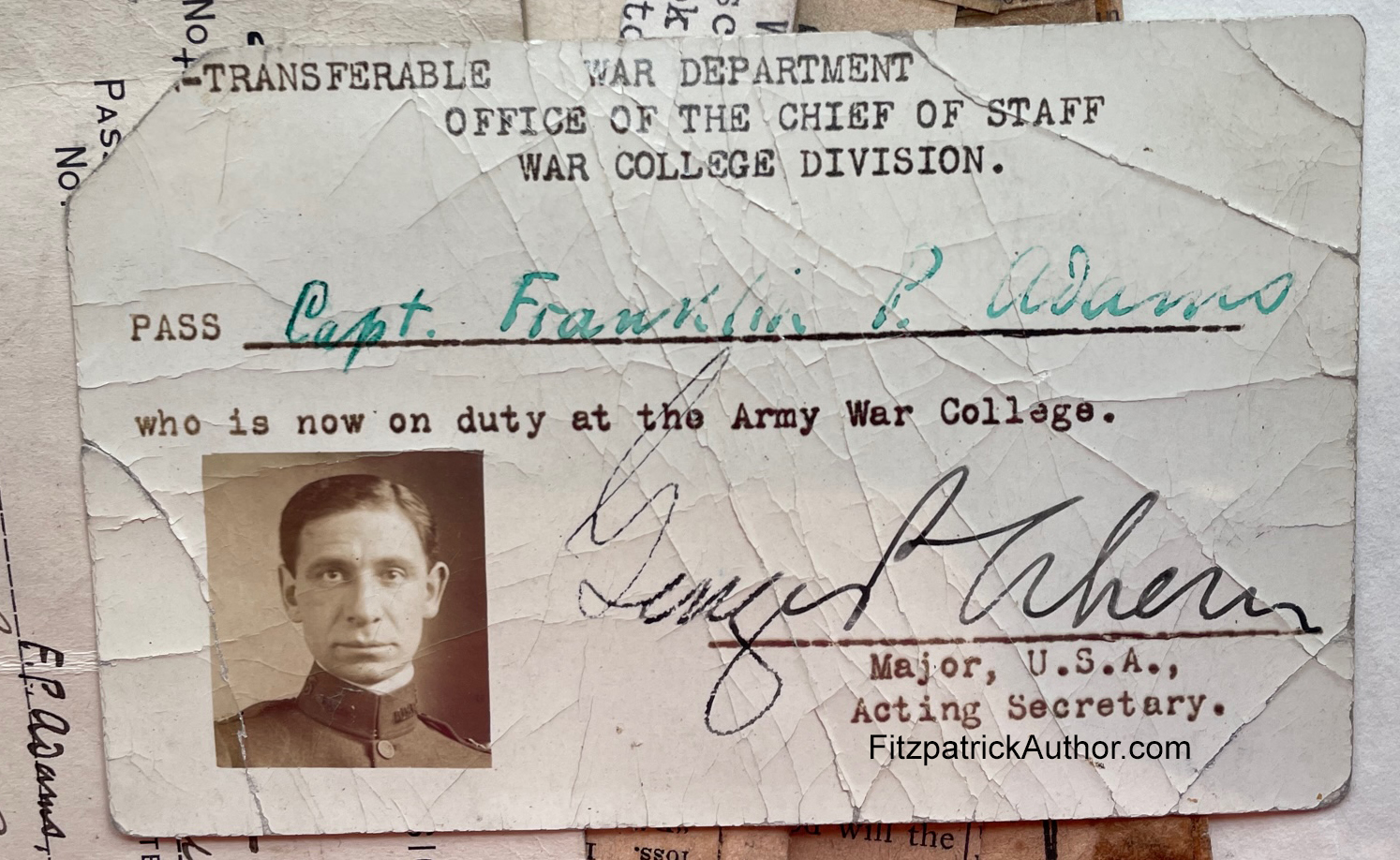
The Algonquin Round Table comes alive in the only New York tour devoted to the famed literary group. It met from 1919-1929 and is America’s most well-known group of writers. We will trace the footsteps (from your house) of the legendary wits Franklin P. Adams, Robert Benchley, Heywood Broun, Marc Connelly, Edna Ferber, George S. Kaufman, Harpo Marx, Dorothy Parker, Harold Ross, Robert Sherwood, Alexander Woollcott, and the rest of the “Vicious Circle.” The tour explore the architectural and historical stories of the buildings and landmarks linked to them.

The tour “begins” and “ends” inside the world-famous Algonquin Hotel, a national literary landmark. This 1-hour tour will visit more than 30 places. Tour Highlights:

• See the Theatre District and the landmark Broadway playhouses;
• Visit the locations of the former speakeasies of Rockefeller Center;
• See where the Round Table lived in Hell’s Kitchen during Prohibition;
• Learn about their 1920s friends such as F. Scott Fitzgerald;
• See where The New Yorker, Vanity Fair, and Vogue magazines began.

Not only will you get a taste of New York history, but it’s a great way to learn about the past and also see how little has changed over the decades.

The guide is Kevin C. Fitzpatrick. He is the author of The Algonquin Round Table New York: A Historical Guide (Lyons Press), A Journey into Dorothy Parker’s New York (Roaring Forties Press), and Under the Table: A Dorothy Parker Cocktail Guide (Lyons Press), among others. He’s president of the Dorothy Parker Society.